Tuesday, November 29, 2016

Driving While Morally Outraged


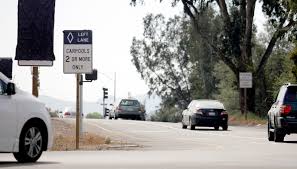
My wife didn’t sleep well last night, so I drove her to work this morning. And after I dropped her off and waited my turn in the metered lane of the onramp to get back on the busy freeway, I saw several cars whiz past me in the unmetered carpool lane, none of which contained the required two occupants or more for that lane.

I felt resentful and wished there were a CHP unit stopped somewhere nearby monitoring these blatant violators and preparing to sock one of them with a costly ticket that would, henceforth, deter them and others from taking advantage of highway amenities for which they didn’t qualify while the rest of us dutifully abided by the law.

Of course, if all those drivers who disregarded the law obeyed it instead, the metered lane would have backed up even more than it did, and my wait would have been even longer. So was it really such a bad thing that some drivers illegally took advantage of the carpool lane? Was that really so different from infractions I commit all the time such as breaking the speed limit?

My first inclination is to think improperly using a carpool lane violates Moral Foundation Theory’s principle of fairness in a way that exceeding the speed limit doesn’t. And, being the political liberal I am, I’m purportedly more insistent on people treating each other fairly (and caringly) than are my more conservative fellow humans who are said to place equal if not greater value on other innate foundational values such as liberty, even when I arguably benefit from some people acting unfairly and using the carpool lane when they shouldn’t, thereby decreasing the traffic and wait time in the metered lane for those of us who act fairly.

Yet, how is it really being unfair to me if I’m actually being helped by it, and, if it is unfair, why don’t I think it’s unfair of me and others to exceed the speed limit when others don’t? Why don’t I stay at or under the speed limit and feel angry when others fly past me?

Am I maybe just resentfully envious of drivers who improperly use the carpool lane when I don’t have the nerve to do it, although I do have the (less) nerve required to speed?

Maybe if I spend more time thinking about all of this, I’ll be able to discern a significant difference between speeding and misusing the unmetered carpool lane of a metered freeway onramp that justifies my indifference to the former and aversion to the latter. Or, failing that, maybe I’ll either stop speeding, or I’ll stop feeling upset and self-righteous about carpool lane violators and go on about my driving with greater equanimity.

Sunday, November 27, 2016

San Junipero and Artificial Paradise


I grew up watching the original version of the television anthology series The Twilight Zone, and I still consider it one of the finest television series ever. Now there’s a worthy successor to it in the brilliant British anthology series Black Mirror. It focuses on the dark side of modern technology.

Last night, I watched an episode from the series that I found extraordinarily moving. It was titled San Junipero. If you haven’t seen it yet, you might want to before reading the rest of this post.

The basic storyline can be found here, so I won’t bother offering my own inferior summary. But what I will say is that right after I watched this episode, I felt so moved--overwhelmed with emotion actually--that I posted the following to Facebook: “I just finished watching one of the most beautiful and moving stories I've ever seen on a TV or any other kind of screen! I am just blown away with equal parts sadness and joy! It's an anomalous episode from the third season of "Black Mirror," the brilliant British TV anthology drama series usually focusing on the dark side of technology. The episode is "San Junipero," and I recommend it in the strongest terms to anyone reading this who can watch the show on Netflix or some other way, because it's THAT extraordinary.

I watched this episode last night because I wanted to hear afterward what the Very Bad Wizards had to say about it in Episode 102 of their outstanding podcast series. I listened to the podcast this morning.

I must say that I was so overpowered emotionally last night that I didn’t spend much time reflecting on the deeper issues raised by “San Junipero.” But Sommers and Pizarro spurred me this morning to ponder the story in more depth.

Until last night, all the “Black Mirror” episodes I’ve seen have painted gloomy if not frightening portraits of technological dystopias, but “San Junipero“ seemed much more upbeat and ended with Heaven is a Place on Earth (lyrics here) ringing joyously in the sonic background as the two protagonists drove blissfully off together into their cloud-based paradise. But is the story really as happy as it seems outwardly?

What would it be like to have one’s consciousness posthumously uploaded to the Cloud where one could experience for as long as one wished a place or era or perhaps any number of places and eras as though one were still embodied but know that one was not?

Tamler and Somers surmise, and the episode reinforces this, that at least some of those who choose this fate could end up jaded, bored, and emotionally numb in an “afterlife” where one can do pretty much what one wants without consequences and eventually runs out of novel experiences to spice up life and make it worthwhile, finding oneself trapped in empty, hedonistic decadence.

This reminds me of a famous Twilight Zone episode in which a petty criminal dies in a shootout with police and ends up in a place he thinks is heaven because it’s filled with every hedonistic experience--like having beautiful, adoring women at his beck and call and always winning at gambling--that he craved in life, yet he quickly becomes bored and even miserable and jarrringly discovers that he’s not where he thought he was.

Not only that, but knowing before one dies that one can be transported to cyber-paradise and even being able to preview it on a weekly basis beforehand could cause one to look forward so much to the artificial reality of the afterlife that one ceases to be fulfillingly engaged in the reality of this life.

Yet, come to think of it, how different is this from the monotheist focused on escaping this earthly vale of sin and tears into everlasting heavenly bliss? Moreover, the people who ended up in San Junipero were already old and/or dying before they went there, and many of them, like Kelly, had lost their spouses and/or children to the grave. They had very little left to look forward to in their current lives, and poor Yorkie had been a motionless quadriplegic for forty years and now had the chance to run joyfully across the sand with her gorgeous lover for as long as the two of them wished.

By the way, everyone who elected to be uploaded to the Cloud after they died had the ability to opt out and die completely or, perhaps, to change their artificial locale, era, and circumstances whenever they so chose. That is, if heaven turned into hell, they could exit into a new virtual reality or into oblivion at any time.

So, it’s hard for me to see “San Junipero” as a typical “Black Mirror” dystopian nightmare. And if I were given the chance to do what Yorkie and Kelly did, I’d probably take it. After all, not so unlike Yorkie, I’ve lived a life that, while very comfortable by worldwide and historical standards, has been quite bereft of rich experience. If I could artificially reinhabit my youthful body and go back to my teenage and early adult years of the sixties and seventies knowing what I know now, I might have quite a time of it. And when I got tired of it all, I could do what I suspect we all end up doing anyway.

The only thing that might give me pause would be uncertainty about just how trustworthy and foolproof the process actually was. For if we humans are intrinsically flawed, it would probably be foolhardy to assume that any of our technologies are impervious to failure or, perhaps, misappropriation, and a failure or misuse of the technology discussed here could conceivably turn San Junipero into a ghastly nightmare one could never escape.

Wednesday, November 23, 2016

Am I Really a Liberal?


I read an article today I may blog more about later. But right now I want to focus on one aspect of it. The article is a concise summary of social psychologist Jonathan Haidt’s take on the psychobiological roots of political liberalism and conservatism.

Haidt says research shows that liberals are “open” to and even crave novel experiences whereas conservatives resist novelty and stick with routine and that these differences are very likely biologically programmed and innate. Thus, liberals naturally push for social and cultural change they think will make life better, and conservatives naturally recoil from such change they think will disrupt established order and make life worse.

I first became acquainted with Haidt’s claim from his TED talk a few years ago. And I remember thinking that my political liberalism doesn’t fit Haidt’s mold. That is, I’m very liberal politically but exceptionally resistant to change in my personal life. How could this be?

I didn’t think much more about Haidt’s claim until it dawned on me today that what may be happening in my case is that I’m like other political liberals in craving novelty, but I stick with many routines not because I really want to but because my cognitive deficits and psychological hangups prevent me from seeking the novelty I’m naturally predisposed toward.

For instance, in his TED talk, Haidt says conservatives gravitate to restaurants like Applebee’s and liberals to ones like Chez Panisse. Yet, I am just the opposite. I like Applebee’s and have never eaten in a real French restaurant.

But why is that? Is it because I really want to keep eating at the same old humdrum places? Or is it because, while I want to eat at new places and sample new cuisines, I’m afraid that my learning disabilities and social awkwardness and anxieties will poison the experience and I want to avoid this unpleasantness?

After all, I know nothing about French food. Not only about what it is but also about how to order and, perhaps, even eat it in a way that won’t make me look stupid. So, I stay away from Chez Panisse or the Moroccan or Afghan restaurant nearby, just as I avoid doing so many other things, especially in public, because I don’t want to appear awkward and stupid and be looked down on.

Yet, when it comes to doing things, like reading about or listening to new ideas in philosophy, science, religion, or what have you, I love it and seek out these experiences with relish, so long as I don’t do it in a public manner that potentially exposes me to looking awkward or stupid.

That is, I love to read about or listen to new ideas in private or with people with whom I feel comfortable. But I wouldn’t be as keen on exposure to these ideas in situations where I’m with others with whom I might be expected to intelligently discuss these ideas, because I’d be afraid that I wouldn’t be up to the task and would look stupid.

And in some cases, I resist doing new things even when I don’t fear that other people would think I looked stupid doing them, because I’m afraid that I would FEEL stupid trying to do them and failing. For example, I might stay away from an art gallery because I don’t “get” art, even though I’d really like to, and I don’t like to place myself in situations where I feel inadequate.

In an upcoming blogpost, I’d like to say more about the article I read today.

Sunday, November 20, 2016

Zakaria Interviews Kissinger


I've come to pretty much despise CNN. Its pre-election obsession with Donald Trump is no small part of the reason. It seemed that almost every time I tuned into CNN over the past umpteen months, they were talking almost exclusively about "TRUMP...TRUMP...TRUMP."

It was as though there were virtually nothing else, short of an occasional terrorist attack or natural catastrophe, going on in the world worth covering. To make matters worse, their coverage of Trump, as with almost everything else they sporadically touched upon, was shockingly shallow.

Rather than investigate Trump's past with due journalistic diligence or thoughtfully explore the ramifications of his policy proposals, such as they were, CNN chose to lightheartedly and nitwittedly dwell at mind-numbing length on "The Donald's" most recent petulant tweet in response to the latest SNL skit mocking him or on some other such trivial nonsense. They treated Trump like everybody's favorite clown, or, as NYT literary critic Dwight Garner semi-famously said, like a "dancing bear" who always has a chance to win when an election is turned into a "three-ring circus."

Indeed, if psycholinguist George Lakoff is right, this incessant attention from CNN and the rest of the so-called mainstream media, even when seemingly negative, boosted Trump's visibility and correlative popularity. I'm thinking it may well have been the decisive factor in Trump being elected.

But there's one CNN program that I still like. Well, actually, there are two. The other is Anthony Bourdain Parts Unknown. But first and foremost is Fareed Zakaria GPS.

No doubt many, depending on where they fall on the political spectrum, would accuse Zakaria and his show of being either too liberal or too conservative. But I find every episode informative and thought-provoking even though I'd love to see a wider range of guests and opinions presented.

Fareed's first guest today was Henry Kissinger. Now say what you will about Kissinger--some consider him one of our greatest Secretaries of State while others think he's one of the world's most monstrous living war criminals--, this 93-year-old guy seems to have retained his smarts, and he said a couple of things today that stood out to me.

First, he said that Trump comes to the office with less "baggage" than any president-elect he could recall. I think he meant that Trump doesn't appear to be intransigently ideological and hasn't spent time in political positions where he's accumulated political debts to anyone. Once in office, he could do pretty much what he wanted provided it was constitutional and he could, when necessary, marshal requisite popular and congressional support.

When Zakaria asked whether Trump carried the baggage of policy proposals he made during his campaign, Kissinger cautioned against the press 'nailing' him to those positions and criticizing him for turning away from them, because there was a chance that if they did as Kissinger advised, Trump's pragmatism would prevail over destructive and dangerous ideology.

This morning, I saw a Saturday Night Live sketch where Adam Baldwin portrays President-elect Trump feeling overwhelmed by preparations to assume office and exhibiting resistance to carrying out some of his campaign pledges, such as rescinding Obamacare. And I thought this might not be so far from how it really is for Trump now that the campaign is over and it's time to dispense with the bullshit and face up to the crushing realities of being president of the world's pre-eminent nation. Maybe Kissinger is right that we can help him to handle reality more effectively by giving him some space.

Yet, what the sketch also showed was Trump delegating as many duties and responsibilities as possible to Mike Pence and his staff. And given the sensibilities and histories of Pence and others Trump seems intent on surrounding himself with, I fear that he'll be letting incompetents, fanatical ideologues, and ethical pygmies run this country while he largely retires to his gold-plated penthouse in Trump Tower between ceremonial functions in which he'll represent this country on the domestic and world stage with nothing approaching the impeccable intelligence, eloquence, and class our outgoing president unflaggingly demonstrated for the past eight years.

The second thing Kissinger said was that Trump's professed attitude toward Russia's Vladimir Putin may actually defuse some of the tensions between our countries that the condescension toward Russia and the aggressive expansion of NATO's military capabilities near the Russian border under the Obama administration may have gone far to arouse.

We shall see...

Urgent Self-Change


To change one’s life:
1. Start immediately.
2. Do it flamboyantly.
3. No exceptions.
― William James

Early last week I became more convinced than ever that I need to change the course of my life. Not so long ago, I might have ‘nakedly’ disclosed what convinced me. But today I hold such personal matters closer to the vest.

Suffice it to say that I’ve followed up on my conviction by making some promising, if underwhelming, preliminary progress. Yet, I feel the need to do much, much more. My question is, How should I proceed?

The William James quote above rings true to me in a powerful way. That is, if one wants to change one’s life, one needs to unreservedly jump right into the deep end and go for the gusto. On the other hand, psychologists say that change most likely comes one small step at a time in a systematic series of well thought out steps.

I don’t precisely know how I’m going to go about changing myself. I just know that I need to find and follow through with an effective way to do a bang up job of it. Or else...

Friday, November 11, 2016

No More Holy War


What if love was holy, and hate was obscene?
And it wasn't twisted, what a wonderful dream.
Living for love, unafraid of the end.
Forgiveness is the only real revenge.
Oh, so we can hear each other and feel each other,
We can break these walls between each other.
Baby, blow by blow and brick by brick,
Keep yourself open, yourself open.
So maybe we should love somebody
Maybe we could care a little more.
So maybe we should love somebody
Instead of polishing the bombs of holy war.

-- Alicia Keys

The recent election of Donald Trump as our next president has left me reeling with disbelief and despair along with more anger and bitterness than I care to admit. I expect to post more about this after I've had time to gain a clearer perspective on it all.

In the meantime, I want to share a video I saw and commented on this morning. A clearly distressed but hopeful Alicia Keys posted a video to Facebook after the election in which she sings a modified segment from her song Holy War. And here is the comment I left on her page in response to her powerful video:
Alicia, I'm a relatively old man who confesses that while I've long been aware of you, I haven't listened to much of your music, because I've always been more drawn to instrumental jazz and jazz-fusion music than to lyrical songs. But I have to say that I've seen some recent interviews you've done that have left me enormously impressed with the stirring beauty of your spirit and with your gleaming authenticity. And when I woke up early this morning and saw this video, I cried. The unguarded rawness and depth of your singing and emotion touches me overwhelmingly and gives me hope that during these most troubling of times, there are people like you in the world who are inspiring love rather than hate, hope rather than abject despair, and that maybe, just maybe more and more of us can follow your lead. Thank you, beautiful lady, for your wonderful video and for being a light in my life and in all our lives during this dark, dark moment in our nation's history.

Saturday, September 17, 2016

The Perils and Promise of Cyber Love?


A friend of mine seems to be madly in "love" with a woman from a very different culture and many years his junior whom he's never even met, although he did see her once from afar but exchanged no words with her at the time, and with whom he's communicated only by text, voice messages, and, for the first time last night, an extended voice chat on Facebook Messenger.

It remains to be seen whether the feeling, or anything even remotely approximating it, is mutual, although there's some suggestion that there's at least deepening disclosure and, perhaps, affection coming from the other side.

I place quotation marks around "love" above because I seriously wonder if it's possible to love somebody under the limited circumstances I've described, and if it's wise to think that, just from this kind of circumscribed interaction alone, one has probably met the person of one's romantic dreams and that they should get married.

I have severe doubts, even though I've arguably played a major role in bringing this developing situation into fruition and now feel more than a twinge of regret ambivalently mixed with hope that things will end up for the good of all concerned.

A case could be made, I suppose, that people can get to know one another surprisingly well from a distance through the technological miracle of modern electronics, perhaps even better in vital ways than they likely could under intimate pressure to put their best face forward in close physical proximity with the desired other.

That is, maybe the two parties involved have revealed more about themselves to each other much more quickly this way than they would have over a much longer period were they spending time with each other in person, and that whatever they're coming to feel for one another is realistically based on deeper knowledge and understanding of each other through this modern means.

But then again, there are things about a person and our compatibility with them that we can only really know by spending time with them in person, whether in or out of bed, and these things, although perhaps not all-important, may be important enough that we shouldn't rush headlong into feelings of "love," much less thoughts of marriage, without them. Yet, how can we deny the heart what it's bent on feeling, and to what extent should we even try?

In saying these things, I probably sound like the naive, wishy washy, and abysmally socially inept person I unquestionably am. I've been around a comparatively long time, but my wisdom and commonsense fall woefully short of my longevity, and, as paradoxical as it may sound, the longer I live, the more uncertain I seem to become about virtually everything involving human relationships and almost everything else.

So, I guess the best I can do is sit back and watch the unfolding melodrama with as much empathy and caring as I can for my friend and the other person, whom I know very casually, and, if asked, offer the best advice, however inept it might be, that I can and hope that all concerned live happily ever after together if possible and separately if need be.

Sunday, June 26, 2016

White Supremacists Attacked in Sacramento


Things got violent and bloody in downtown Sacramento this afternoon not more than five miles away from my house. A white supremacist group assembled in front of the state capitol building to demonstrate white power or some such idea, and they were met by a large group of protesters who physically clashed with them.

I don't know all the details, but as of this writing, I understand that at least five people were transported to the hospital with stab wounds and/or other injuries, and two of the victims were said to be in serious if not critical condition. I've also read unconfirmed reports that the victims in question were all protesters stabbed and/or clubbed by the white supremacist demonstrators in self-defense.

In any case, the video I've seen shows quite the melee. It took state police on horses and city police to break it up. And in one video, I saw a young Asian woman representing the protesters triumphantly saying words to the effect that white supremacists aren't welcome to march in Sacramento and that if they do, they'll be turned away forcefully if need be.

As you might expect, Facebook abounded with a spectrum of opinion about the confrontation. Some blamed Donald Trump for creating a climate of anger and hatred. Others said the dastardly supremacists got what they deserved, with one of my "friends" calling the female Asian protester a "heroine" and saying, "To arms if necessary." Others said that while they detested the white supremacist message, they believed that everyone has a right to nonviolently express their opinion without being physically attacked. And then there were those who went further and excoriated the evil liberals who think only they have a right to free speech and that everyone who disagrees with them should be silenced in any and every way necessary. Before you knew it, the commenters were busy insulting each other. Suffice it to say that these kinds of discussions seldom bring out the best in humankind, and this was no exception.

I agree with those who said that the skinhead supremacists had a right to march nonviolently without being assaulted and battered. But I can also empathize with those who say that some views are so repulsive and provocative that they shouldn't be tolerated. I admit that a part of me felt a hint of glee that those odious supremacists were attacked. For not only were some of them injured, but the police prevented them from marching and dispersed them after the violence broke out. But another part of me felt saddened that people were seriously hurt by the violence and that human beings can't disagree with one another without turning physically and verbally violent about it.

Next time, if there is a next time, let the white supremacists march, and either just ignore them or hand them flowers and figuratively shower them with love bombs. But don't give them any grounds for legitimizing their derogation of non-whites and their liberal supporters.

But what if they were the local pastor and his congregation at a gay parade shouting and waving signs to the effect that all gays should be rounded up by the federal government and shot by firing squad? Or what if they were NAMBLA members demonstrating for the right of men to have legal sex with young boys? Or what if it was a group of white skinheads in Ferguson, Missouri marching down the street yelling "Ni**ers" when race relations there were already running very hot?

I guess a principled person would say that they should have that right no matter how provocative their demonstration happens to be, but one would nevertheless be hard-pressed to blame protesters for posing very vociferous if not physically violent opposition to them.

I just hope that if this sort of thing has to happen somewhere else, it doesn't happen anymore in my fair city.

Saturday, June 25, 2016

Preliminary Thoughts on Brexit


Brexit seems to be the world's biggest story at the moment. The British people have voted in a referendum to exit from the European Union, and in the immediate aftermath of this momentous decision, ripples of uncertainty and chaos are coursing through the economies and politics of many nations.

I've done some reading about what Brexit is and what it's likely to mean for the UK and the world, but I'd be the first to admit that I know very little of what there is to know about the whole thing. And it seems pretty clear to me that even those who know vastly more about it than I do don't begin to know for sure what's going to happen as a result of it.

Some on one far end are predicting enduring economic and political catastrophe. Some at the other far end are predicting economic and political nirvana for the UK and for other nations that extricate themselves from the centralized mismanagement and evil of globalization and open immigration.

As for me, I'm intellectually agnostic and taking a wait and see attitude about it. But emotionally I'm angry about Brexit, and I haven't been reticent to focus that anger on a Facebook friend of mine who voted for Brexit and is happy as hell that it passed.

I think what I'm so angry about is that I see the British vote as largely the result of a misguided populism fanned by power-hungry demagogues appealing to the deeply entrenched tribalism, racism, nativism, isolationism, and simplemindedness of large swaths of the population, much like Donald Trump is doing in this country, and I hate it, just hate it.

But then I think that, aside from momentary ill effects of Brexit on our own economy, I really don't have good reason to care all that much about what happens in the UK. It's their country and their decision to make, and I need to stop engaging in one of my most frustratingly ineffectual pastimes--trying to control what others think and do.

I admit that I do have concerns that what happened in the UK could presage a Donald Trump presidency. After all, just as pollsters here are predicting that Hillary Clinton will win November's election, I think pollsters in the UK were predicting that Brexit would not prevail there, and look what happened.

I read an article somewhere arguing that the two situations aren't equivalent because whereas Brexit is largely the result of activated racism on the part of many if not most of those who voted for it, Trump's largely racist message of blocking immigration and condemning radical Islam will not win enough hearts and minds of our much more racially and ethnically diverse electorate to get him elected. However, I'm not so sanguine about this.

But the bottom line, as I see it now, is that frustration, anger, and fear about what Brexit means for the UK, the world, and the USA won't help me or anyone else. So, it's time to bring my emotions in harmony with my intellect and go on about my business.

Thursday, June 23, 2016

What Kinds of Guns and How Much Gun Control Do We Need?


In the wake of the recent, terrible massacre in Orlando, House Democrats and Republicans worked together to author and pass a bill that would have imposed modest restrictions on legal gun sales to certain people deemed a credible threat for gun violence. Presumably the passing of this measure would have prevented the Orlando mass-murderer from legally obtaining the weapons he used to kill 49 people and wound 53.

But the bipartisan supporters of this bill were unable to secure the number of votes necessary to overcome procedural blockage to bringing the bill before the entire House for a vote, and the subsequent 25-hour Democratic sit-in aimed at appealing to the public and the rest of Congress to have the bill brought up for a vote was eventually swept aside by Republican House Speaker Ryan, and the Republican controlled House of Representatives continued on with business as usual blocking all gun reform.

Discussions I've seen since then on Facebook and elsewhere continue to plow the same fruitless ground, and, frankly, I don't know what to think. What if any restrictions should be placed on gun ownership? Who should be allowed to own guns and related accessories, what kinds of guns and accessories should they be allowed to own, who decides, and who enforces the decisions? And would implementing stronger gun control measures on a state-by-state or federal scale significantly diminish gun deaths and violence in a country plagued with gun deaths and violence?

Both sides of the issue marshal statistics to support their cause, and, especially given my uneasy familiarity with such maxims as "Figures lie and liars figure," I don't know what to make of them. The "pro-gun" people cite figures that gun ownership stops more crime than it causes; their opponents argue the opposite with their own figures.

And then, of course, "pro-gun" people cite the Second Amendment as ironclad proof that virtually every American citizen has a right to own guns, despite the counterargument that the Second Amendment refers only to gun ownership in a "well-regulated militia" and was authored at a time when muzzle-loading muskets were the standard firearm and posed far, far less of a threat for mass-shootings than assault style semi-automatic weapons with high capacity magazines do today.

But the impression I get from discussing this issue at any length with ardent "pro-gun" people is that the real reason to make widespread gun ownership free and easy is not because of the Second Amendment or as a means of deterring or stopping crime, but as a way of deterring or stopping the federal government from tyrannizing the American people.

That's right, if Obama or some godless Democratic president ever gets it in his or her head that we should all be thrown into concentration camps or subjected to complete government oppression, we can grab our assault weapons and fight off the U.S. Army, Navy, Air Force, Marines, National Guard, and Seal Team 6, and retain our freedoms as true-blue, flag-waving, apple pie devouring Americans.

In fact, one person on Facebook said, with less melodramatic elaboration, this very thing to me this morning. And I responded by asking him whether, in order to counteract the awesome weaponry of the U.S. military, private citizens should be allowed, if they can afford it, to possess the same weaponry as the U.S. military, including fully automatic weapons, flame throwers, tanks, cluster bombs, chemical, biological, and nuclear weapons, and so forth. For if not, how credible a deterrent can the American people offer to a military takeover, and, if so, what danger would we be in from religious and political zealots and the mentally ill armed with military grade weapons of mass destruction?

I never got an answer from him. He just kept going back to the Second Amendment. I know the Supreme Court has traditionally interpreted the Second Amendment as granting private citizens outside "well-regulated militias" the right to "bear arms," but I guess I need to investigate the legal rationale for this as it seems to me very clear from reading the words alone that this right applies only to citizens manning said militias.

Aside from that, I'd like to see probing discussion in the media and elsewhere of the very issue I raise about which weapons private citizens should be allowed to own in order to deter or stop government tyranny, because I can't say that I've seen much or any such discussion.

I personally don't see compelling reason for why we shouldn't prohibit the sale and ownership of all assault style weaponry, high capacity magazines, and military type body armor, except, perhaps, with well-regulated exceptions, or why we shouldn't impose draconian sanctions on those who defy these prohibitions or, at least, who commit crimes using prohibited weaponry and accessories. People can still defend themselves with more modest weapons like conventional shotguns, hunting rifles, revolvers, and semi-automatic handguns, and they can still indulge their passion for recreational shooting or their need to hunt for food to put on the table without wielding AR-15's with 75-round drums.

These are just preliminary thoughts of mine about this perennial issue of gun control. Maybe I'll have more to say after I've investigated the matter further.

Wednesday, June 22, 2016

Are the Intellectually Mediocre Truly Oppressed?


I posted yesterday about an online magazine piece asserting that high intelligence is fetishized in this society while lack thereof is mocked and unfairly disadvantaged. And no sooner had I shared a link to that piece on Facebook than a thoughtful Facebook friend of mine largely disagreed with its thesis.

According to him, the media caters to stupid people with stupid "news" and entertainment content, politicians such as Donald Trump successfully appeal to the lowest common denominator in intelligence and thoughtfulness with the crassest and most simplistic political nonsense and manipulations, and stupid, thoughtless people show no shame in asserting their stupid, thoughtless opinions on Facebook and everywhere else. If anything, my friend opines, stupid, thoughtless people dominate political and other kinds of discourse in this country while intelligent, thoughtful people are given short shrift.

I concede that he may be right in some respects, but I think the article and my blogpost about it are also correct that people of average to below-average overall intelligence and/or academic achievement are looked down on and disadvantaged by a society that increasingly views high intelligence as the touchstone of human worth and which affords less and less opportunity to the intellectually and academically mediocre to earn a decent living and flourish.

Yes, the media and politicians will cater to and thereby reinforce mediocrity if there's money and power to be had from it, but this doesn't mean that those who control the media and society at large respect intellectually or academically mediocre individuals or that the mediocre consequently respect themselves and aren't filled with conscious to subliminal self-loathing, and it could and has been argued that strong support for the likes of Donald Trump and the ostentatious embrace of fundamentalist religion and racist, sexist, jingoistic, and simplistic conservative politics is at least partly the result of a backlash against feeling scorned and oppressed by the liberal intelligentsia.

In other words, I think both The Atlantic piece and my friend are right about what are two largely separate but concurrent phenomena.

Tuesday, June 21, 2016

We Can't All Be Smart


"As recently as the 1950s, possessing only middling intelligence was not likely to severely limit your life’s trajectory...The 2010s, in contrast, are a terrible time to not be brainy...We must stop glorifying intelligence and treating our society as a playground for the smart minority. We should instead begin shaping our economy, our schools, even our culture with an eye to the abilities and needs of the majority, and to the full range of human capacity...Smart people should feel entitled to make the most of their gift. But they should not be permitted to reshape society so as to instate giftedness as a universal yardstick of human worth."
I just read an outstanding piece in The Atlantic that addresses an issue that's concerned me for some time. It decries the glorification of smart people and the corresponding derogation of not-so-smart people in our increasingly meritocratic society.

It says that while having a high IQ and/or high academic performance indicators is increasingly the gateway to the better jobs, people with lower IQ's and/or academic achievement indicators are perfectly capable of doing some of those jobs as well as anybody, but not only do they not get the chance, but they're also looked down on and even made fun of with impunity.

The article also points out that not everybody has the innate ability to score well on standard IQ or SAT tests or to graduate with honors from high school and college, and that it isn't fair for a society to essentially determine a person's worth on the basis of these standards and to award all the spoils to those who excel in them.

Yes, great head start programs can help elevate socioeconomically disadvantaged kids to higher IQ scores and academic performance, but we don't spend enough and hire and train enough capable people to produce enough uniformly excellent programs of this type. And, yes, better programs to find gifted children in socioeconomically disadvantaged areas and to provide them with educational enrichment to make the most of their superior potential can help them to do just that.

But none of this will help the lot of us who can't be molded into smart people by any special interventions. What's to become of us?

The article recommends that we should have more schools for solid vocational training. There are still plenty of fairly well-paying jobs for people with strong skills in non-academic areas that don't require conventionally high IQ's. However, one problem is that the few schools that now specialize in this kind of training still admit a disproportionate number of applicants on the basis of high academic performance.

And then there's the problem the article doesn't address of what to do with freaks like me. I've written ad nauseum in this blog about my learning challenges, so there's no need to elaborate here except to say that while my verbal IQ and fluency is relatively high, my overall cognitive functioning is severely compromised by my very low nonverbal ability, making me and people like me unfit for vocational training for most "skilled" jobs and hindered enough even in academic areas to be incapable of excelling there either.

I don't know what the answer is to the issues the article and I raise. All I know is that not all of us are or can be made smart enough to "make it" in a society that seems to be obsessed with high IQ's and academic performance and in which more and more of the jobs that remain after an increasing number of others are displaced by automation will undeniably require high IQ's. And I think we as a society need to find ways not only to make sure that those of us who aren't in the shrinking, privileged, intellectual minority can still survive and flourish economically, but that we are also not disparaged and excluded for being less than brilliant.

Human worth is or should be seen as a beautiful quality intrinsic to all persons, and everyone should be esteemed and treated accordingly. And to those who say, "In a perfect world, this might be possible, but in THIS world it is not," I would say, "Isn't part of the gift and purpose of humankind to dream things that never were and ask 'Why not?' and to work to make them so?"

Monday, June 20, 2016

No More Basketball in My Life


I used to watch a fair amount of NBA basketball and was a big Warriors and Lakers fan over most of that time. But I gradually lost most of my interest in NBA or any other level of basketball until the Warriors won the NBA championship last season and appeared to be on their way to winning another this season with the most exciting game and player in the game. 

They did set the all-time regular season record this season by winning 73 games and losing only 9, but toward the end of the regular season and then in the playoffs they began to falter.

I'm not sure why this happened. There are probably many interacting reasons: Other teams adjusted to what they were doing. Stephen Curry suffered some injuries that compromised his remarkable shooting and ball handling skills. They were physically and psychologically depleted after pursuing and setting the regular season record. They lacked the "length" and raw athleticism that tend to favor teams in very hard-fought NBA playoff games. Etc, etc.

The Warriors lost the seventh game in Oakland to the Cleveland Cavaliers and LeBron James last night, and it and the whole series really pissed me off. They were up 3-1 in the series and allowed Cleveland to come back and beat them three games in a row. 

And it seems like they virtually handed some of those games to the Cavs with horrible passing, shot selection, and shot percentages. Curry made some particularly egregious plays in vital situations such as behind the back passes that went out of bounds or were easily stolen, and ridiculously long, forced shots at key times when there was plenty of time on the clock to set up better shots and it was so, so important that they score. 

Curry may well have had an injured shoulder, knee, and goodness knows what else that prevented him from working the miracles he did earlier in the season, but then he should have realized this and played within himself instead of making obscene mistakes when it mattered most. One of my Facebook friends said that Curry doesn't play smart basketball. I didn't want to admit it at the time, but he was right. Curry plays dumb basketball too much of the time on both offense and defense.

I'm very disappointed in Curry. But I think I can attribute this in no small part to doing what I said after the Ronda Rousey defeat that I wasn't going to keep doing--put people on a high pedestal that no human being, because we're all imperfect, warrants. So, maybe this time, I'll be able to follow through with my resolution.

In addition to this, I plan to stop watching NBA basketball or paying any attention to it. I find that when I do watch it or pay serious attention to it, it's because I've become so emotionally invested in a team that I get really agitated when they play poorly or lose, and I become very hostile to opposing players and fans. I don't need more of this in my life, nor do I need to keep wasting time watching basketball or reading about it when I could be doing so many other things that are more worthwhile.

Maybe over time I'll be able to enjoy watching basketball and even root for a team without getting emotionally bent out of shape over it the way I do now, but I don't think that will or should make a difference. Like I said, there's so much else I could and should be doing with the precious time left to me, and watching and following NBA or college basketball just doesn't rate on that rarefied list.

Monday, May 30, 2016

An Afterlife Under Any God?


A dear friend of mine is in hospice care with advanced Alzheimer's Disease. The decline has been shockingly rapid, and I don't fully understand why, although I think it's probably for the best for his family and friends that it's happening the way it is instead of being much more drawn out.

Anyway, I posted something to Facebook last night about my friend, and another friend of mine, Tom, who recently met the unfortunate victim of this terrible disease at my house, made a comment about his hopes for the afterlife, and I replied with my less sanguine thoughts about what any real afterlife would likely consist of.

Here is what he and I wrote:

Me: Sitting at the bedside of a good friend who seems, for reasons I don't fully understand, to be virtually comatose and close to death from cerebral hypoxia associated with an advanced stage of Alzheimer's. What an awful, cruel disease Alzheimer's is!

Tom: Terrible, terrible. While I have no faith in the Gods that write books, I do hope that there is some sort of "veil" we pass through after death where we get some sort of explanation what life, in general, and our life, in particular, was all about.

It's not that I think a life between just birth and death is meaningless. It is just that I think a reason and meaning for having been alive is due us. In Hamlet, the Bard talks about "defeated joy."

Me: Tom, if we die and that's the end of our personal existence and consciousness, it won't matter to us whether we find out why we were here or not. But if we go on to inhabit forever and ever some conscious afterlife, as much as I, like you, would love to believe that we would learn the answers to all our pressing questions and reap huge benefits from this, I'm more inclined to think that posthumously everlasting life could eternally make the trials and tribulations of this ephemeral lifetime seem like a joyous picnic by comparison.

In other words, if so much inequality, injustice, and suffering can dominate this life, what's to stop this from occurring on a far more iniquitous and torturous scale in any life to come? A supremely loving, just, and merciful God? What God is that? One of the "Gods that write books"? Any God that created and sustains THIS unholy vale of earthly tears?

What do you think about Tom's and my comments, and what do you think happens to us after we die, and why do you think it?

Wednesday, April 27, 2016

Mocking the Learning Disabled


Several times, I've seen a video on Facebook making fun of a female driver who repeatedly parks with the wrong side of her vehicle facing the gas pump until she finally gets it right. On YouTube, the video is titled "Stupid woman at gas station," and many comments on both YouTube and Facebook derisively echo the YouTube title.

But I don't feel like laughing. To me, the video appears to be a textbook depiction of nonverbal learning disorder, and this is a problem with which I have a frustrating lifetime of firsthand experience. Here is the comment I posted to Facebook and YouTube about it, and I hope some people take it to head and heart:
I don't laugh at videos like this, because I empathize with the driver. Like me, she may well have NLD--nonverbal learning disability--and, consequently, great difficulty seeing in her mind's eye how to get the proper side of her vehicle to face the gas pump. And the frustration she undoubtedly feels over her mistakes coupled with anxiety that people might be watching her struggle and laughing at her might well inhibit her reasoning faculties to the extent that she keeps impulsively repeating her mistakes instead of finding some way or other of collecting herself so that she can figure out how to do what she needs to do. She could be very intelligent in other ways. And even if she's not, I wish we would have more empathy and compassion for people who struggle to do things that we are fortunate not to struggle with.

Friday, April 15, 2016

My Friend is Married to the Shrew From Hell


A friend of mine has been living in a loveless marriage for years. But it's gotten even worse recently. His wife has long insisted that things be done her way with precise exactitude and that my friend jump to her every imperious command. But over the past couple of years, she's become the shrew from hell who not only stomps and yells like an insane person when she doesn't immediately get her way, but she even makes thinly veiled threats that if my friend doesn't do what she says, she'll kick him out of the house, and if he refuses to leave right then and there, she'll call the police and falsely accuse him of a serious crime, like the wife of someone I know may have done years ago when she accused him of molesting their young daughter, and he ended up going to prison and then being deported after he served his time.

I find it close to unfathomable that someone could treat her spouse or anyone else this way, no matter what the provocation. I find it even more so that my friend's wife could treat HIM that way. I've known my friend a long, long time, and he is the most mild-mannered and accommodating person I think I've ever known. He also doesn't lie and isn't prone to exaggeration, so I have no trace of belief that he's lying or exaggerating about his wife's behavior. If anything, he's probably understating just how bad it is!

I don't know how I would feel or what I would do if my wife treated me this way. I know that I'd get the hell away from her as soon as I could possibly manage it, because my vow to stay married "for better or worse" never extended THAT far. But I don't know how well I'd be able to hold my temper if she came at me with a hissy fit or with serious threats like my friend's wife does him. I'm not nearly as mild mannered or accommodating as he is. 

Thank God my wife is nothing like my friend's!