I have always cared more for instrumental music than for vocals. This became especially true after I discovered the Mahavishnu Orchestra in the early 70's. But after watching American Idol with my wife for the past two seasons, I find myself paying more attention to vocals. Not so much the vocals of so-called "American Idols" as those of truly great singers.
I believe that two of the greatest singers I have ever heard are Aaron Neville and Aretha Franklin. I had heard Aaron Neville for years but never paid much attention to him until I saw a late night commercial for his greatest hits album and heard portions of some of the songs adorning it. When I later heard his full version of Amazing Grace, I was overwhelmed.
I have always loved this song even though I am not Christian. It reaches into my heart and soul like perhaps no other song. But Neville's angelic voice takes it to another level of sheer transcendence. I have read that when Neville performs this song in concert, he touches his audiences so deeply that he leaves most of them in tears. I can understand why. Here is a YouTube clip of him singing it, and here is an excerpt of Aretha Franklin giving a very different but enrapturing rendition of it.
After watching some of Aretha's performances on YouTube and hearing them on Rhapsody, I now understand why she's the "Queen of Soul" and a force of nature with that miraculously powerful and inspiring voice of hers. And after seeing Neville perform a devastatingly poignant version of Randy Newman'sLouisiana 1927 on an NBC benefit concert in the summer of 2005 for the victims of Hurricane Katrina, he became my favorite singer of all.
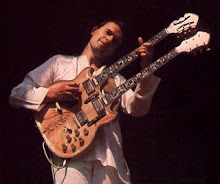
In March of 1972, I went to San Francisco's famed rock venue Winterland to see my favorite music group Emerson, Lake & Palmer play their enticing and popular brand of progressive rock. But opening for them was a group I had never heard of called the Mahavishnu Orchestra. I had no idea what to expect from this group and frankly didn't care, since I was there strictly for ELP. But when famous rock promoter Bill Graham came to the stage and introduced the MO as "the tightest assemblage of musicians in the world today," I was intrigued. I was even more so when five musicians took the stage who, with the exception of the long-haired and bearded violinist Jerry Goodman, didn't look anything like the rock musicians I was accustomed to seeing in that era. The boyish looking guitarist, John McLaughlin, had very short hair, was clean-shaven, and was dressed in white pants and a white, short-sleeved T-shirt that said "Mahavishnu Orchestra" on the front. He was also holding the first double-neck guitarI had ever seen. The keyboardest, Jan Hammer, and bassist, Rick Laird, were also clean-shaven, and the black drummer Billy Cobham looked like a bodybuilder.
I had a feeling that something extraordinary was coming our way, and when McLaughlin asked for a moment of silence, my level of anticipation grew. I don't remember what they played first, but it was loud and like nothing I had ever heard before. As they continued, I went from struck to dumbstruck with the music they were playing. It was breathtaking in its awesome complexity, virtuosity, and intensity, and there was something of an odd and otherworldy spiritual nature to it that reached deep into my soul like no music ever had before or has since. This magical music grabbed hold of me and wouldn't let go. From that night through today, the Mahavishnu Orchestra (in what turned out to be its first of four incarnations) became my favorite musical group of all time, and John McLaughlin became my favorite musician. In fact, they were my virtual musical obsession for the better part of three decades.
And I wasn't alone. The MO revolutionized both rock and jazz, and John McLaughlin became one of the most influential electric and acoustic guitarists in history. People were blown away by the MO, other groups were soon refusing to follow them (ELP never wanted to follow them again after that concert at Winterland), countless musicians, including Carlos Santana, were inspired by them, and countless more anonymous music lovers like myself were never the same after hearing them.
Here is how the great jazz guitarist Pat Metheny described his first experience of seeing a Mahavisnu Orchestra concert at the University of Miami in 1972:
Of course, as we all know, the first thing was the minute of silence with John all in white and all those guys looking kind of intense and stuff before they even started. I am thinking...something is about to happen...the tension that they set up was tangible. Then they started, and the first thing was the sound of it. I had thought Coryell was loud, but this was easily 10 times louder. It was the loudest thing I had ever heard. It was louder than loud. I think the term "face melting" would fit here. It was totally encompassing. The tunes that I heard on The Inner Mounting Flame, which kind of sounded like a few guys in a room playing--not unlike a jazz group, but one dealing with some truly unique material, suddenly took on these monumental, epic proportions. It seemed impossible to tell who was playing what. Dance of Maya, with the 12-string ostinato arpeggio, was suddenly the sonic equivalent of the ebb and flow of the biggest ocean. The unison violin-guitar stuff was like Ornette and Cherry but with this ridiculously precise undercurrent of rhythm. What time signature is that? Is that a guitar? A violin? Who cares! The tangibles of the music became the 50th thing on the list of priorities at that minute. Because for all of the incredible dexterity on display--I mean, we were watching three people (John, Cobham and Jan) completely and forever reinvent the meaning of their instruments in jazz--it was the spiritual power of it that transformed all of us that night. In the end, it was the real accomplishment of that band...It was interesting to see the reactions around me as the concert wound down. I had never seen an audience react like that to music that was that advanced. People went crazy. That included the vast majority of people who were there that had no idea about the details of the content--they just got the FEELING of it. I am certain that everyone there remembers that concert to this day.
Walter Kolosky, like me, was never the same after seeing the MO for the first time. But, unlike me, he wrote a wonderful book about the group that I am now reading. The book is titled Power, Passion and Beauty: The Story of the Legendary Mahavishnu Orchestra: The greatest band that ever was. It tells the whole story of the group by seamlessly weaving revealing interviews with all of the group members, supporting personnel, and other famous musicians into Kolosky's spare but enchanting history and commentary. If you have any interest in the Mahavishnu Orchestra or in the jazz fusion genre of music of which they, along with Weather Report and Return to Forever, were undoubtedly the greatest exponents, you owe it to yourself to read this outstanding book about the "greatest band that ever was." And check out the amazing, albeit ancient, videos of the group on You Tube, including the ones below.
10 Tuesday AM Reads
-
My first day of Autumn reads (Fall Equinox is 8:04 P.M!): • How Much Is
Being Close to Your Favorite Artist Worth? Superfans Are Reshaping the
Concert I...
Doubt of Doubt and Certitude of Certitude
-
Brief recrapitulation: if there is exists a way upward & inward to a
post-disenchanted Cosmos, then we had better get the RH off the disabled
list or at ...
Free Choices and Open Futures (Chapter 1.5)
-
Kane contrasts the conditional necessity of determinism with the “Open
alternatives” of free will in which we can deliberate on those alternatives
and choo...