Tuesday, December 09, 2008

Like Father, Like Son

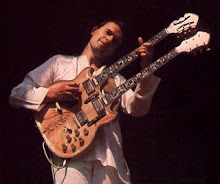
L. Subramaniam is one of the finest violinists on the planet, and it looks like his son is following in his footsteps.

Monday, December 08, 2008

Economic Double-Think

There's kind of a weird double-think involved in arguments that the slump should be allowed to follow its natural course. It's true that classical economics says that we should let market forces do their work; but classical economics also says that severe recessions can't happen. This idea that we must not intervene is based on a worldview that is refuted by the very fact that the economy is in the mess it's in.
--Paul Krugman

Sunday, December 07, 2008

Overcoming Poverty of the Spirit

And I marveled to find that at last I loved you and not some phantom instead of you; and I did not hesitate to enjoy my God, but was ravished to you by your beauty.
– Saint Augustine


To deepen our love, to unify our desires, the Lord – the Self within – on occasion gives us a fleeting taste of the joy of union. Once we taste this joy, all we want is to be permanently aware of him in everyone, everywhere, every minute. This intense longing is the mark of genuine spiritual experience.

At the same time we experience the joy of union, we see clearly the great mass of self-will that weighs us down and keeps us from our most cherished goal.

Yet none of us need feel disheartened. Remember how even great figures like Saint Augustine almost despaired when they saw how powerful was the pull of selfish satisfaction. That is our human conditioning, and it is no reason to give up. All of us can learn to reduce our excess baggage.
--
Eknath Easwaran


If I'd ever had Easwaran's "fleeting taste of the joy of union" with the Lord, perhaps I would hunger and strive with all my heart to know it permanently. But I have not, and so I do not.

How can I, and how do I? By meditating and contemplating enough? How much is enough? And how does one do enough without the inspiration of which Easwaran writes? Just as one needs money or other resources in order to earn more money, doesn't one also need to feel inspired in order to make an enduring effort to make big spiritual gains? I often feel like a man who is too poor to become rich.

I don't say this because I am depressed or demoralized; I say it because I don't know what to do, yet, I continue to look for it.

Friday, December 05, 2008

Thursday, December 04, 2008

Quote of the Day

I’ve been ruminating over economic prospects for next year, and I’m getting scared.
--Paul Krugman

Tuesday, December 02, 2008

A Witty Reply

I just returned from the supermarket. While waiting in line to pay for my groceries, I overheard this exchange between a customer and the checker.

Customer: How was your Thanksgiving?

Checker: We had to work.

Customer: That's too bad. But at least I guess you got paid well.

Checker: We got paid closer to what we're worth.

I thought this was a good, witty answer. This is one reason why I don't use the checkout machines to pay for my groceries even if I could do it faster that way. I like the human touch, and I like to hear conversations like the one above.

Monday, November 24, 2008

Opportunity Lost

I don't know what prompted me to check up on him yesterday. I just had the feeling that I should. I did that periodically with him. Just to see how his career was going. He and I were never close friends. In fact, I never had any close friends growing up. I was a loner. But he lived down the street and around the corner from me through elementary, junior high, and high school, and we spent a fair amount of time together playing playground football and basketball and walking home from school discussing music, politics, religion, school, classmates, the Vietnam War, "recreational" drugs, and whatever else caught our attention through the wild and crazy times of the mid to late 60's and early 70's.

Once, in our early teens, we were throwing rocks at each other, the way rambunctious boys like to do or, at least, we did, and I hit him with a big rock in the head just above or below the eye. He ran into his house crying. He and I were lucky I didn't blind him or worse. But he didn't hold it against me. I could have been the one hit instead of him.

One day, as we were boarding the school bus, he was the one who told me that Jimi Hendrix had died. I wasn't as familiar with Hendrix back then as he was, but I still remember feeling sad that such a famous musician had died so young and so pointlessly.

For a few years back then, I fancied myself a reasonably smart guy. Then, in high school, I found out who the really smart people were, and I wasn't one of them. But my friend was. I first became aware of this when we took a physiology class together in our junior year. He excelled; I struggled to memorize the locations of the organs we had to identify on the human cadavers on which we were tested. He and I both wrote term papers on sleep. But his was much better than mine. As I recall, he even secured an interview with William Dement at nearby Stanford University. I simply paraphrased books and magazines from the school library.

After high school, I saw my friend only one time. It was a year or two after graduation. It was a summer afternoon. I was visiting my old elementary school to shoot some baskets, check out the old neighborhood, and see if anyone I knew came by. I was hoping most of all to see my old friend. And I was happy when he did come by and we talked for awhile.

My memory is fuzzy about details. It always has been. But I think he sat and played a guitar. I do recall us talking a little about John McLaughlin. I had recently discovered him and was eager to sing his praises. I think my friend had heard of him but wasn't familiar with his music. I felt sad when we parted company, like I was losing one of my only connections, tenuous as it was, with the past.

I didn't attend our 30th high school class reunion, but my friend did. Had I gone, he was the one I'd have most wanted to sit down and talk with. For I had Googled him off and on over the years, and I would have loved to hear firsthand about his work. Until yesterday, I had this fantasy that I would finally become enough of a success in life to attend my fortieth or perhaps I'd have to wait until my fiftieth class reunion, and my friend would be there, and we could have that talk I'd been wanting to have with him for decades.

But I found out yesterday that I'll never get that chance. My friend died last year. I don't know how he died. I just know that if I ever do attend one of my future class reunions, he won't be there. That means I probably won't attend.

I dreamed about him last night. I seldom remember dreams very well, and last night's is no exception. But I do remember that Steve and I were on a bus together. It was evening. We were on our way home but got off early to eat at a restaurant. At least I thought he was going to join me at the restaurant so we could eat and talk and catch up on old and not-so-old times. But he declined to go in the restaurant with me. He just said "bye" and took off walking. I went in the restaurant, disappointed, but I couldn't eat. I came out and gazed up the street, hoping to see my friend. He was gone from sight.

I wonder how many people with whom I used to play sports during recess or after school or sit in class have walked up that road and disappeared forever, except, perhaps, from my dreams. And I wonder if anyone from my distant past thinks of me the way I did of my friend and hopes to meet me at the next class reunion and reminisce with me about old times, and if I should go on the off chance that someone does, before there are no more chances.

Saturday, November 22, 2008

Criminalizing Homelessness?

I heard Michael Medved say something interesting again yesterday. He was talking about homeless people, and he said that people don't have a right to live on the streets. Ok. So where are people who have no place to stay supposed to go? What is the law that Medved would like to see enforced supposed to do with the homeless? Throw them in jail? For what fair reason? For how long? And to what effect? If you have no place to stay, where are you supposed to live? Where are you supposed to sleep? What are you supposed to do? You can try to get a job. But what if you can't? And what if the job you get doesn't pay enough to rent a place to stay, or it will take a long time to save enough from it to rent a place? What's a person to do until then? What is the law to do with him? How should we as a society regard and treat him?

Michael Medved seems like a smart person. He also seems like a fool.

Friday, November 21, 2008

In The Right Way

Michael Medved made an interesting remark yesterday on his talk show. He urged his fellow conservatives to stop attacking Obama's presidency before it even begins and to get behind him and give him a chance to succeed. After all, our nation is in such a mess right now that everybody should want to see him succeed "in the right way."

I found that "in the right way" to be revealing. What Medved seemed to be saying is that he wanted the nation to prosper, but only by Obama following the conservative ideology of minimal taxation and government, huge military, and one nation under the Judeo-Christian God.

I wonder if this means that Medved would prefer that the country fail rather than succeed if Obama follows liberal principles of bigger government, higher taxes (especially on the wealthy), a smaller military, and continued separation of church and state. I further wonder if Medved would rather see the country fail under conservative policies than to see it succeed under liberal ones.

I suspect that he would, even though he'd probably never admit it, even to himself. I suspect that he's so wedded to his conservative ideology that it's more important to him than practical results.

It would be easy to condemn him for this. But then, to be fair, I'd probably also have to condemn myself too for being something of a mirror image of Medved. For, deep down in my heart, I'd probably rather see the country flail and flounder under liberal policies than prosper under conservative ones. I try not to feel that way. I try to open my heart and mind to whatever truths lie along the entire political spectrum and to value results more than ideology, but it's an arduous uphill climb.

In the final analysis, I want to see as many people in this nation and entire world be as healthy and happy as possible, and to see the Obama administration enact policies that foster this condition. I suspect that such policies would have to incorporate elements of both liberalism and conservatism to such an extent that they ultimately transcend both. That, ideally rather than emotionally speaking, is what "in the right way" means to me.

That's a tall order, but one I hope to see begin to come to fruition under President Obama.

Tuesday, November 18, 2008

Dennis Prager Puts His Faith Above Archaeology

I just heard Dennis Prager make a very interesting argument on his radio show today. He was talking about an upcoming NOVA episode on PBS television concerning the Bible. He said it claims to "debunk" the Old Testament as a factual history of the Jews, using the latest and best archaeological findings and knowledge.

But Prager insisted that he isn't swayed by archaeology. Archaeology can't trump his faith, he said. His main argument was that the Old Testament is the only historical record he knows of that paints the origin of its own people in such uncomplimentary terms. The "histories" or mythologies of other peoples make them out to be brave and noble creations or descendants of the gods, whereas the earliest Jews are depicted in the OT as "ignoble" slaves and savages. Therefore, argues Prager, the Old Testament history of the Jews must be true, and archaeology be damned.

I don't know if Prager is correct in claiming that only the Jews have constructed such an unflattering history of themselves. But whether he is or isn't, does he make a good argument for disregarding scientific evidence about the historicity of his faith?

Sunday, November 16, 2008

Quote of the Day

If you want to know where we are right now, rent the movie “Jaws.” We’re at that moment when Roy Scheider first sets eyes on the Great White Shark and comes back and says to the skipper, with eyes wide with fear: “You’re gonna need a bigger boat.”
--Thomas Friedman

Saturday, November 15, 2008

Boycotting Those Who Supported Prop 8?

A Sacramento theater director resigned recently after patrons learned that he'd contributed $1000 to the Proposition 8 campaign and they threatened to boycott the theater. On a radio talk show soon after, the host and numerous callers, even though many of them opposed Prop 8, expressed sympathy for the director and disagreement with those who sought to punish him for freely exercising his legal right to support a cause in which he believed.

At first, I was inclined to agree with this stance. In fact, I guess I still am. But I've read about this story and done some thinking about it since then, and I'm a little more equivocal about where I stand than I was at first. For one thing, I'm sympathetic to the argument that he earned money from the productions staged at his theaters and used some of this money to support Prop 8. So, how could someone, in good conscience, continue to put money in his pocket that he could end up using to deny people their basic human rights?

Suppose the director, Mr. Eckern, had supported a ballot initiative to constitutionally ban interracial marriage or same-sex couples joining in "civil unions" granting the same rights to them that married couples enjoy. Or imagine that he were a NABMLA member who supported a proposition to legalize pederasty. Would and should we be so quick to sympathize with him and to criticize those proposing to boycott his work from which he earned money to support these dubious causes?

You might say that these hypotheticals, expecially the NAMBLA one, are not equivalent to supporting Prop 8, but if you were homosexual and fervently believed in same-sex marriage, you might well disagree. I'm not gay, but I still have some difficulty comprehending a clear difference between my hypotheticals and Mr. Eckern's support of Prop 8.

So, to be consistent, I'd have to say that I wouldn't boycott someone for supporting a ban on interracial marriage (even though I'm a Caucasian man married to an Asian woman) or for supporting the legalization of pederasty (even though I find pederasty appalling) any more than I would for his supporting a ban on same-sex marriage, despite the fact that it would be my legal right to boycott him for exercising his legal right to use the money he earned from my patronage to support any of these causes. But I'd darn sure want to.

What about you?

Friday, November 14, 2008

Nanny State Nonsense

Last night I heard Dennis Miller rail against the "nanny state" he thinks Obama and the Democrats are poised to usher in whereby the invigorating "American Way" of having to work harder and harder to keep a roof over our and our family's heads, food in our mouths, clothes on our backs, and, if we're lucky, minimally decent health care will give way to the innervating security of big government satisfying our every need and whim while we sit back snugly and twiddle our thumbs.

Well, I work my butt off forty hard hours a week for peanuts, I have no paid holidays or vacations, no employer-funded health care coverage, even though I work for a major metropolitan health care system, and no pension, and I pay an astronomical sum, given my and my wife salaries, for health insurance under COBRA because my "preexisting condition" makes it impossible for me to obtain even remotely affordable coverage any other way. And, even so, I have it better than a lot of other Americans.

I don't think that I or we would be sapped of all ambition and vitality if we had paid holidays and several weeks of paid vacation each year to refresh and recharge ourselves, solid health care coverage provided by our employer or the government, and a livable wage. In fact, I know I'd be grateful for all of this and willing and able to work just as hard if not harder to earn what I received. It seems to me that working too hard for too little in return and worrying constantly about finances and health care is what actually saps our energy and ambition most of all. Many of us are too preoccupied with just staying afloat, and I believe that the "American Way" can and should be about more than this and that the government can play an important role in making this happen without turning our country into an emasculating "nanny state."

I think that Obama, in contrast with many Republicans, believes this too, and this is one reason why I'm glad he'll be our next president.

Thursday, November 13, 2008

Quote of the Day

"Better to be a fool for all of eternity than a fool pretending to be a sage."
--Anonymous Friend

Monday, November 10, 2008

Robert Reich's Economic Solution


One of the few blogs I read regularly is Robert Reich's blog. Reich used to be President Clinton's Labor Secretary, and he now teaches at U.C Berkeley's Goldman School of Public Policy. He believes that our nation's economy is now in such severe difficulty that it qualifies as being in a "mini-depression," and that what we need is a "maximum strength remedy" of substantial deficit spending on our crumbling infrastructure.

Reich argues that just bailing out the financial sector isn't good enough because "the real problem is on the demand side of the economy" with consumers who are afraid to spend or borrow (even if extremely cautious banks would lend to them) because they're already deeply in debt, their real incomes are falling, and they're afraid of losing their jobs. Cutting taxes won't work either because this mostly benefits the wealthy who'll tend to save the money they obtain from tax cuts more than they'll spend it, and the rest of us will tend to use our modest tax rebates to pay off debts or buy products made mostly overseas.

So, what we need to do, argues Reich, is spend $700 billion or more next year on "repairing roads and bridges, levees and ports; investing in light rail, electrical grids, new sources of energy, more energy conservation" to cause a "double whammy" effect of creating many new jobs and improving the workings of the future economy. However, we need to draw up a "capital budget" that lists spending priorities to make sure that we "avoid pork." To objections that we can't afford to increase our already monstrous budget deficit, Reich replies:
Government spending that puts people back to work and invests in the future productivity of the nation is exactly what the economy needs right now. Deficit numbers themselves have no significance. The pertinent issue is how much underutilized capacity exists in the economy. When there's lots of idle capacity, deficit spending is entirely appropriate, as John Maynard Keynes taught us. Moving the economy to fuller capacity will of itself shrink future deficits.
I'm not an economist. Hell, I couldn't even stay awake when I tried to read my economic textbooks in college. But what I'm gathering from reading the "experts" now is that an increasing number of them agree with Reich about what we need to do to rescue our economy from its downward spiral. And I suspect that Barack Obama is going to do or try to do what Reich recommends.

Sunday, November 09, 2008

The Magic of Pistol Pete Maravich


As I browsed through books at Borders bookstore today, I came across an enthralling biography of the legendary basketball player Pete Maravich entitled Pistol. I'm going to check this book out of my local library tomorrow and read it. But I read enough of it in the bookstore to rekindle my awe of the late Maravich's basketball wizardry. No, he couldn't fly through the air like a Michael Jordan and perform amazingly acrobatic dunks, but he could do other things with a basketball that can only be described as magical.

He averaged a remarkable 44.2 points per game in college. This was before there was a three-point shot, and one college basketball coach later reviewed all of the shots Maravich took in college games and calculated that had there been a three-point shot when he played, Maravich would have averaged 57 points per game. After Maravich graduated from college, he immediately became a star in the NBA. In high school, college, and the NBA he executed dazzling dribbles, passes, and shots that have to be seen to be believed, and below is a YouTube video that provides a tantalizing glimpse of his phenomenal skills.