Thursday, February 23, 2006

Manifesting the Higher Self

William Harryman has the kind of talent and motivation to produce the kind of blog I wish I had. His Integral Options Café is a remarkable combination of style and substance, beauty and sagacity. It’s one of my favorite blogs, and I try to read it every day. Yesterday, he posted the following quote from Ken Wilber that has resonated with me ever since:

One of my favorite exercises from Quaker prayer gatherings is: "Let the next sentence out of your mouth be from your very highest self." Everybody gets quiet at that point! But that's the kind of attitude we want to bring to these dialogues. New structures in consciousness are being laid down right now--they are just faint footprints on the face of the cosmos. So your behavior, to the extent that you live up to your highest, is actually creating structures that future humanity will inhabit. Therefore, choose your acts very, very carefully. Make sure that the next action you take comes from your highest self. Make sure that the next thing that you say comes from your highest self. Then there's hope for the future. Those structures are already being laid down. God is laying them down; Spirit is laying them down--through us. So we have to become appropriate vehicles for Spirit to lay down the very structures that humanity is going to inhabit. And if we don't, that is a guilt we will carry with us for eternity.

I left the following comment:

Make our next words and deeds come from our highest self. What a wonderful idea! It sounds so obvious and simple that you wonder why everyone hasn't been saying and doing it long before this. But maybe it's such an obvious and simple idea that it's been utterly elusive until a sage like Wilber comes along and expresses it aloud. Now that he has done so, let's see what we can do with it.


Yes, let’s see what I and all of you who read this can do with it today and every precious day and moment for the rest of our lives.

Wednesday, February 22, 2006

Iran and Nuclear Weapons


There’s a lot of talk in the media about stopping Iran by whatever means necessary from developing nuclear weapons. I can understand the international concern. Who wants a country with more than its share of influential Muslim fanatics and led by a president who says Israel should be wiped off the map making nuclear bombs and possibly selling or giving some to Osama & Company?

But, having said that, I wonder what right the USA or any other nuclear power has telling Iran that they shouldn’t or can’t join the nuclear elite. “We have ours, but you can’t have yours,” doesn’t strike me as being very fair or as carrying a lot of moral weight. I suppose we could say that we don’t want nuclear weapons in the hands of Muslim nutcakes, but why should the biggest and deadliest nuclear arsenal in the world be held by the only country that has ever used nuclear weapons against innocent people, and why should they lie under the command of a simpleminded Christian fundamentalist like George Bush?

What it seems to come down to is that if the world or some part of it has the might and determination to stop Iran from developing nuclear weapons, it will do so or spark a cataclysmic war trying. But as long as those who are trying to stop Iran from developing nuclear weapons already have them themselves, they lack a certain moral standing to take the action they do unless and until Iran threatens to use these weapons against others in unjustifiable ways. So far, I’m not aware of them having made any such threats. Of course, it’s pretty difficult to threaten to use weapons one says one doesn’t even have any intentions of developing.

Monday, February 20, 2006

Psychology and Free Will

I’ve long wondered how one could be Christian (or Muslim or Jew) and believe in psychology at the same time. For it seems to me that psychology is the science that studies mental processes--including volitions--and behavior and the conditions that cause them, whereas a cornerstone of Christianity (and Islam and Judaism) is free will. Thus, psychology says that every human choice is caused by antecedent conditions, whereas Christianity says that human choices are not caused by antecedent conditions. That is, no matter what interacting biological, social, cultural, and psychological conditions existed at the time someone made a particular choice, she could have made a different choice than the one she actually made, and if that same set of interacting conditions were to somehow recur, the person in question could choose differently than she did the first time.

This is how I expressed this idea in a recent
post to an online forum:
Psychology is the scientific study of mind and behavior. Science presumes that all events have causes which, in turn, have causes, and so on. Thus, psychology presumes that all human mental phenomena, including choices, and all behaviors are caused by something, which, in turn, are caused by something else. Now if choices and acts are caused, they are the inevitable effects of their causes and not free to be other than what they are given the causal conditions giving rise to them. Yet, Christians, on the other hand, believe in some kind of mysterious free or uncaused and uninevitable will that is not caused by anything other than a free--i.e., undetermined--agent. And uncaused human mentation and behavior is not amenable to scientific--i.e., psychological--study and therefore seems incompatible with the fundamental assumption of psychology that human mentation and behavior can be studied scientifically. Thus, I don't see how one can truly be Christian and truly believe in psychology at the same time.

In a subsequent post, I tried to express the argument above the following more concise, logical form:
(1) Science is the systematic study of phenomena and
their causes.


(2) Psychology is the science that studies the
phenomena and causes of the phenomena of mentation, including will, and
behavior.


(3) Free will is uncaused will.

(4) Therefore, psychology and free will are
incompatible.


(5) Christians believe in free will.

(6) Therefore, Christianity and psychology are
incompatible.


Again, I don’t understand how Christians can believe in psychology. Nor do I understand how so-called forensic psychologists can testify for the prosecution in court that someone could have chosen not to commit a crime but went ahead and did it anyway. How could any psychologist or psychiatrist worthy of the name testify to such a thing? As far as I’m concerned, the legal definition of “insanity” as not knowing right from wrong or as being unable to avoid wrongdoing would seem to apply to the psychological and psychiatric understanding of ALL criminal acts. That is, from a psychological or psychiatric perspective, how are ALL criminal acts not insane?

Sunday, February 19, 2006

Ethical Dilemmas


One of my favorite TV programs is 24. I know that it’s unrealistic that one organization, CTU, and one person, Jack Bauer, could succeed in saving the nation from diabolical terrorist plots so many times and all in a twenty-four hour period, but it’s still exciting TV about highly skilled people and an extraordinary hero triumphing over evil time and again.

In the most recent episode, CTU,
Jack Bauer, and the president of the United States are faced with a terrible ethical dilemma. Russian separatists, angry that their plot to use a deadly nerve agent against the Russian government and people has been foiled by elements in the U. S government, are determined to exact revenge by using the gas to inflict heavy casualties on the American people. They have many canisters of the gas, and they decide to use the first in a shopping mall filled with a thousand men, women, and children. Jack Bauer is working undercover with two of the terrorists preparing to unleash this gas in the mall. CTU, the president, and, ultimately, Jack Bauer must decide whether to allow the terrorists to kill the people in the mall with the gas so that these terrorists can maybe be followed back to the other terrorists and the remaining canisters of gas, or to stop them in their tracks. Of course, if they’re stopped, the other terrorists will be able to use those other canisters to kill perhaps hundreds of thousands of people.

What should the president decide? What would you decide if you were the president? The president decides to sacrifice the lives of the relative few for the lives of the many, and CTU concurs. But Bauer, who has seen the faces of the would-be victims of this attack up close and personal, is in a position to overrule the president’s decision or to go along with it and allow the terrorists to do their deadly deed. What should he do? What would you do?

I can think of an analogous real life situation that took place during World War II. Allied intelligence had broken the German code and knew when the Germans were planning to destroy ships carrying passengers and supplies from allied countries. The allies could have used this info to save those ships and many lives, but if they did, the Germans would know that their communications were being deciphered and greater harm could result than was prevented. The Allies decided not to tip their hat, and many innocent people lost their lives.

I would hate to be in a position of having to decide what to do in cases such as this, but I love to see fictional stories posing these kinds of
ethical dilemmas and to grapple with them in my mind and heart. Part of the attraction I find in this is that there seem to be no clear-cut answers. While part of us hungers for clarity and certainty, it would seem that part of us loves ambiguity and uncertainty. At least part of ME does.

Thursday, February 09, 2006

I Feel Offended


I usually like to post entries where I am the one doing most of the talking instead of just quoting or linking to others. But now that I’m becoming busier with school and other matters, I seem to have less time to write as much as I’d like. Yet, I still like to post something interesting to me and hopefully to you almost every day. So, today I’d like to post a satirical piece by Sonia Mikich that I think addresses the Muhammad cartoon controversy with delightful astuteness. To pique your interest, here is a brief passage from her article:

Zealots are nailing veils onto the faces of my sisters in Afghanistan and Pakistan and are busy hanging women, homosexuals, adulterers and non-believers.

But human rights, women's rights and the right to liberty are the most exalted in the history of humanity; this is the tradition in which I was raised. Values that make the world better and more peaceful.

I demand that the governments of Saudi Arabia, Palestine, Indonesia and Egypt apologise to me. Otherwise I am unfortunately forced to threaten, beat up, kidnap or behead their citizens. Because I am somewhat sensitive about my cultural identity.

I feel offended.

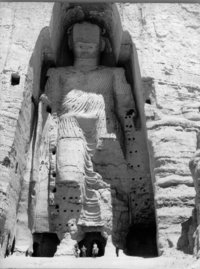
Fanatics are blowing up the Buddhas of Bamiyan, marvellous cultural monuments.

But art is an expression of universal beauty and innocence to me. It is a value that makes the world better and more peaceful.; this is the tradition in which I was raised.

I demand that Hamas, the spokesman of the French Muslims and the Director of the Al-Azhar-University apologise to me. Otherwise I will never spend a holiday at the Taj Mahal, I will call for a boycott of Palestinian fruit and I will set the embassies of Tunisia, Qatar and Bangladesh on fire.

I expect understanding for this at the very least – my feelings are absolute and must be expressed globally.

I feel offended.


Wednesday, February 08, 2006

Christianity's Impotence

One of my many criticisms of Christianity has been that most people who call themselves Christian do such a lousy job of living up to the principles of their faith that it casts the truth and power of their faith in serious doubt. When I stated this recently in a message forum, someone replied:

No Christianity is not flawed at all. It is the people that are flawed and refuse to give up their lives of sin to be a true Christian follower of God's.

This is how I replied:

I disagree. I believe that conventional Christianity--what most people worship from reading the Bible or going to church--teaches about a God who doesn't exist; a Jesus who wasn't what he's supposed to have been and still be; a posthumous heaven and hell that are fictional and, in the latter case, obscene; notions of human nature, will, and sin that are absurd; and countless other things that are either implausible or ridiculous. Thus, it's no wonder that Christianity fails to persuade modern non-believers to embrace it, and to inspire self-professed believers to live by its principles.

Monday, February 06, 2006

The Disgrace of Islam

Some European papers ran a cartoon of Muhammad wearing a bomb on his head and Muslims are on the warpath. Not all Muslims, mind you, but more than enough to strengthen my conviction that Islam is a sorry excuse for a religion. It isn’t just that so many Muslins all over the world are calling for wholesale jihad and beheadings when they’re not busy rioting or burning buildings. It’s also the fact that few prominent Muslim clerics have denounced the violence and that those who have appear to have been ignored by the raging masses.

Do these self-righteous zealots believe that this cartoon harms the great Allah? Wouldn’t that make Allah a pitifully weak excuse for a God? Do they believe it harms Mohammed? How so? They obviously see the cartoon as an insult to their faith. But why can they not see that they and the incredibly intolerant and unspeakably violent behavior they support or in which they engage directly are the biggest insults to their faith?

I try to respect everyone and everyone’s faith, but I struggle to restrain myself from holding Islam in utter and complete contempt. I see it as an essentially primitive and barbaric religion promoting primitive and barbaric behavior with built-in
barriers to its evolution into anything even faintly resembling a genuine wisdom tradition, its Sufi offshoots notwithstanding. If I’m wrong, let Muslims prove it by acting like people of God rather than bloodthirsty savages or de facto abettors of fanatical intolerance and savagery through their habitual silence.

Thursday, February 02, 2006

Diva


Jules is a likable young Parisian mail carrier who does his job on a moped. He’s a peculiar mixture of idealistic innocence and hard-boiled realism. He’s also an opera fanatic benignly obsessed with black opera star Cynthia Hawkins. His obsession is so powerful, in fact, that he surreptitiously makes a bootleg recording of one of her performances with a high quality tape recorder and then steals one of her gowns and later pays a black prostitute to have sex with him while she wears the gown.

But little does Jules realize that his already unconventional life is about to become wildly and dangerously complicated. For two Taiwanese businessmen happen to be sitting behind him while he’s taping the diva’s concert, and they make it very clear to him afterward that they WANT that tape and will go to almost any lengths to get it. Why? Because Cynthia Hawkins doesn’t believe in recordings. She believes that capturing her singing on tape robs it of something precious and constitutes a kind of “violation” tantamount to rape. So, Jules’ pristine recording is a priceless commodity for unscrupulous persons who, unlike Jules, want to exploit its commercial potential.

Yet, this is the least of Jules’ difficulties. For one day while he’s delivering the mail, a desperate woman drops a cassette tape in one of his moped saddlebags just before she’s murdered, and some very sinister characters are determined to get it back and make absolutely sure that young Jules never tells anyone what’s on the tape. When the police become aware of this, poor Jules finds himself pursued by crooks, cops, and murderers.

Fortunately, he befriends a beguiling Vietnamese waif and her mysterious boyfriend who has a thing for Zen-like reflection and real talent for ingenious subterfuge, and he also enjoys a wonderfully sweet romance.

When I first saw
Diva in the theater in 1981, I was bowled over by its mesmerizing music, visual style, unconventional storytelling, and quirky characters. I wasn’t bothered in the least by the fact that it was a French film with English subtitles. That just gave it more authenticity, as did real-life opera star Wilhelmenia Fernandez as the diva. I also liked Frédéric Andréi as Jules, Richard Bohringer as Gorodish and, especially, Thuy An Luu as Alba. I have seen the film several times since then and enjoyed it just as much if not more each time.

Diva is one of my favorite films of all time. I give it an A+.


Tuesday, January 31, 2006

Pillowcase Blues

My wife and I made the bed last night. She couldn’t stand the way the old sheets smelled. It seems as though she’s having virtually all of the symptoms pregnant women experience in their first trimester: “morning sickness,” food cravings, and enhanced sense of smell (especially for odors that trigger attacks of nausea) to name a prominent few. Anyway, she asked me to put fresh pillowcases on the pillows and stepped out of the room, and I spent the next ten minutes trying to do it with no success until I finally gave up in frustration. No, they weren’t standard pillows and pillowcases. I can manage those easily enough. These were foam rubber, biconcave, orthopedic pillows and matching pillowcases. But I should still have been able to readily manage this. Yet, I wasn’t. I couldn’t figure out how to slip the case on over the pillow. I tried it every which way I could, but nothing even began to work.

I often try to just shrug these things off or even laugh about them. But that’s increasingly difficult to do when there’s a decent chance that we’re going to have a baby, and I’m going to be confronted with all kinds of new daily challenges such as feeding, diapering, and bathing my child and properly installing a child’s car seat and safely strapping my child into it. I can possibly learn by exhaustive trial and error to do some of these things, and my wife can show me how to do the rest. But if things don’t go the way I’ve learned to handle them with a rigidly fixed routine and, God forbid, I have to understand the problem with which I’m faced and figure out a solution to it, I could be in big trouble. And so could my child if I’m alone with her (we would both prefer a girl) and I need to figure something out quickly that involves her. Say, for instance, that I can’t figure out a way to get her into her car seat because some small something is out of adjustment. And if we’re out in public and other people are watching me fumble and bumble, I don’t know what the hell I’m going to do. I hate to look stupid. I feel stupid enough as it is, but I absolutely hate for other people to see me looking stupid. Oh well, I guess I’d better get used to it. But just how exactly do I do THAT?

Monday, January 30, 2006

A Mind is a Terrible Thing to Lose

CBS aired a television series two years ago called Century City. It was apparently a kind of LA Law set in the year 2030 and addressing legal and moral issues such as genetic engineering, virtual rape, and artificial intelligence. I remember feeling excited when I heard that this series was coming to television, but I somehow never managed to tune in before it was gone after an ephemeral run of only four weeks.

This morning, I was finally able to view an episode of it on the
Universal HD channel, and all I can say is that I wish to God this series had lasted a whole lot longer. Seldom do I feel impressed by the first showing of any new TV series, no matter how much I come to love it over time. But “Century City” grabbed my adoring attention from the outset and never let go for even a millisecond with its perceptive intelligence, mix of intriguing characters, and, especially, its Charlyesque theme in today’s episode about a woman petitioning the court to assume legal guardianship over her husband so that she could have an intelligence boosting neurological implant removed from his brain against his wishes because he could die if he kept the implant. He didn’t want the implant removed because it had transformed him from being a totally dependent, mentally handicapped man “nobody loved” into an independent, thoughtful, interesting, and brilliant man who could take care of himself and who had a wife who loved him dearly for who he was with the implant. If the implant were removed, he would revert to his old self and would not be anything like the same person his wife fell in love with and married, and his life would become a gross and pitiful degradation of what it was with the implant. He reasoned that it was better to die if he had to than go back to what he was before.

I was totally behind this man. If I were he, I too would rather die with the implant than go on living without it. Having tasted the joy of being intellectually adequate and able to take care of myself, I would rather die than return to being intellectually disabled and totally dependent on others to take care of my needs. This is why I hope that I have the courage and ability to kill myself if something ever happens to me that compromises what limited intelligence I have. And this is why if I had a chance to have some kind of implant that would make my brain whole instead of the malfunctioning and inadequate lump it is now, I would jump at it, even if I knew I might very well die from it.

I realize that people who read this blog might wonder what the hell I’m talking about and think that I must be psychotically disturbed to have such an unrealistic image of my capabilities. But they haven’t grown up as me and encountered the daily and pervasive impotencies and frustrations I have. They don’t know what it’s like to go through life being unable to do almost anything even passably well except speak, write, earn decent grades in school, and knock down pins with a bowling ball. “
Rain Man” types used to be called idiot savants for their extremely circumscribed but extraordinary intellectual capabilities in the midst of overall profound intellectual deficits. I think of myself as more of an idiot semi-semi savant. I’m grateful for the modest capabilities I have. My life would be profoundly bleak without them. But if I could compliment them with at least average capability in other areas that most human beings take for granted, I would be more than willing to assume the medical risks that might accompany it.

I cried as I watched “Century City” this morning. Not only for purely personal reasons, but because it was simply one of the best and most poignant pieces of series television I’ve ever seen. Too bad the American public didn’t agree or even get the chance to.

Sunday, January 29, 2006

Cameras for Speeding Tickets

I’ve heard that some highways now have built-in radars that clock the speeds of all passing cars and that cameras snap photos of speeders for citation purposes. I also understand that this trend may very well grow until virtually all major highways have this system in place before long.

My initial reaction to this was reflexive anger and anxiety. “Big Brother really IS taking over the country!” I thought. But after thinking about it some more, I’m not sure it’s such a bad idea. How many lives have been saved and how much suffering precluded by ubiquitous cameras at traffic signal intersections discouraging drivers from running red lights? How many lives and how much gasoline might be saved if drivers throughout the country were effectively discouraged from speeding.

I speed, and almost everyone I know does too. We do it partly to reach our destination sooner and, perhaps, partly for the sheer exhilaration of it. But I know that I also do it to avoid being run down from behind or, at least, to not be the object of scorn of virtually every other driver on the road. If everybody drove within the speed limit, I could feel more relaxed about doing it too.

It seems a shame that we need these high tech incentives to obey the law. But it appears as though we do in many cases. And if the laws these devices are encouraging us to obey are reasonable, why not? I think the speed laws on our highways are quite reasonable. So why not enforce them with all the high tech we can muster?

Wednesday, January 25, 2006

Clarity

“We only have the capacity, when unimpeded by environmental obstacles and personal limitations, to carry out the unfree choices that we've already made. There is no freedom of will, only freedom of action."

Interpetation-"If we talk in circles and use technical jargon they'll think we know what we're talking about and give into us."

The snippet above is from my recent online discussion of free will. I wrote the words on top, and someone was kind enough to provide his “interpretation” of them below. I wasn’t especially fond of his interpretation, and I was even less fond of someone else’s reinforcement of it, since she has generally been supportive of my writing. My initial reaction was one of indignation in the first instance and a sense of betrayal in the second. But then I thought about it some more, and my feelings changed. They changed when I tried to think of a clearer, better way to phrase my words above and discovered that I couldn’t do it and feel satisfied with the result. I still think that the “interpretation” was a little unfair. But not as unfair as I’d like it to be. For the fact is, I don’t write as clearly as I want about philosophical and spiritual issues, and what this tells me is that I don’t think about them or understand them as clearly as I should before I write about them at all. I’ve addressed this theme
before. But I haven’t done a whole hell of a lot about it since. That’s the story of my life, or, at least, a constantly recurring motif. Will that ever change? Will I ever change it?

Monday, January 23, 2006

All is One, and One is All


The way we define and delimit the self is arbitrary. We can place it between our ears and have it looking out from our eyes, or we can widen it to include the air we breathe, or at other moments we can cast its boundaries farther to include the oxygen giving trees and plankton, our external lungs, and beyond them the web of life in which they are sustained.
--Joanna Macy, World As Lover, World As Self

Alan Watts used to say that the fundamental insight is that all is one and one is all. In other words, every thing and event in existence implies and therefore ultimately IS the unified totality of all existence. A grain of sand is the universe because it exists how, when, and where it does only because the entire universe exists how, when, and where it does, and, conversely, the universe would not exist precisely in the way that it does if not for that single grain of sand.

If this is true of the universe and a single grain of sand, it is also true of the universe and a human being. Watts used to say that if you take all of the qualities or activities of human beings and examine them carefully enough, you’ll see that they all depend on the environment outside the human organism. For instance, human beings breathe; yet, they couldn’t do this without air. They walk; yet, they couldn’t do it without a ground to walk on. They see; yet, they couldn’t do this without external objects to see and light by which to see them. They eat; yet, they couldn’t do it without food sources. They think; yet, they couldn’t do this without things in the outside world to think about.

And, thus, when you look closely enough at the human being and the qualities that make him a human being, you understand that his existence and nature depend as much on what’s outside the skin as on what’s inside it. And this means that if what’s inside the skin is part of what a human being is, so is what’s outside it. That is, human beings are what Watts called “organism-environment fields,” and because every immediate environment of a particular human being depends for its existence on an ever-widening circle of environments until there is no wider environment to encompass it, a human being is ultimately an organism-universe field.

I used to understand the universe as largely a physical domain—an incomprehensibly vast expanse of space and time in which matter and energy form stars, planets, life, and consciousness. Actually, I still have trouble understanding it any other way. It still seems to me that consciousness is a product of matter and energy and not its cause or “ground.” But sages such as Ken Wilber seem to be saying otherwise. I understand them to say that consciousness or Spirit is the ultimate “Ground of Being,” the formless expanse or field in which matter and energy are born and take perceptible form. And personal consciousness and the human “ego” or sense of “I” is also said to take root in this formless domain. I don’t really understand this yet, much less know if it’s true. But I believe that reason and experience does lead me to the insight that all is one and one is all somehow, that Joanna Marcy is correct in what she says above, and that religion worthy of the name should be focused on empowering us to understand and feel the truth of this in the marrow of our bones.

Friday, January 20, 2006

What Now?


I’ve just watched an extremely disturbing video. I’ve seen several hostage beheading videos, but this is the worst in its graphic clarity. It shows a young Japanese man with hands tied behind his back and kneeling helplessly before three masked men, one of whom is reading something aloud in Arabic. Then suddenly they swiftly converge on their hapless victim and two of the men hold him down while the other proceeds to saw through his neck with a large knife from the front while all three excitedly shout “God is great” in Arabic. It takes untold bloody seconds to complete the gruesome task, at which time these maniacs drop the head on the body, then lift and dangle it triumphantly before them, and finally they place it on the victim’s chest, mockingly cradled in his arms, where it remains until the video fades.

I feel a level of hatred and rage toward these men that I can’t begin to adequately put into words. I want these men caught and subjected to the most diabolical and excruciating tortures the human mind can conceive while they scream for the mercy they denied their innocent victim. At this moment, I understand, with startling vividness and power, the human desire for bloody revenge, and if I were in a room with them now and had a gun in my hands, I would blow them all to hell without a nanosecond’s hesitation or remorse.

I understand these feelings, but I do not condone them. I feel them, but I want to recoil from them and bury them under a mountain of mindful equanimity. How should I feel toward the cowardly masked men who perpetrated this horrible barbarity? The saints and sages from all the great wisdom traditions speak of universal, unconditional love. But HOW do I love THESE men? How do I love anyone who condones or praises what these men did? SHOULD I love these men or anyone who approves of their actions? At this awful moment, I want to kill them. Kill them all. If I could press a button and make them and all of their thousands if not millions of supporters and sympathizers disappear from the face of the Earth, it would take all of my powers of restraint to hold myself back.

These are the thoughts and emotions I wrestle with in the wake of viewing that horrifying video depicting human beings at their most fanatical and depraved. How should I deal with these thoughts and emotions? And why do I expose myself to all of this in the first place?

Eknath Easwaran would no doubt counsel me to avoid “poisoning” my mind and heart with psychological “toxins” such as that video. But isn’t its awful atrocity part, and a prominent part at that, of the world in which I live? Should I blind myself to everything that isn’t sweetness and light, or should I open my eyes fully to everything—yin as well as yang, ugliness as well as beauty, evil and well as good--and let the reality of it, all of it, permeate my being? Do I confront savage lunacy and murder by turning my eyes, ears, mind, and soul away from them and acting as though they aren’t even there, or do I fling open the “doors of perception” and take it all into me? But how can I take it all in without either being overwhelmed with hateful if not murderous rage or, eventually, by suicidal depression on the one hand, or accepting and trivializing it and becoming heartlessly less than human on the other? And even if I choose a middle ground by not closing my eyes to human depravity while also not seeking it out, more than enough of it will surely seek me out that I will still have to confront and deal with it in some manner. What manner should that be?

Sages such as the Dalai Lama, Thich Nhat Hanh, and Eknath Easwaran offer various answers, but, right now, those answers ring hollow and ineffectual. Is this because they are truly inadequate, or is it because my mind is too compromised by emotion to appreciate their truth?

Thursday, January 19, 2006

Euphemizing or Euthanizing?

In his blog Tuesday, Joe Perez writes:
Nobody's a bigot or a misogynyst or a homophobe these days. People just have
"race issues," "issues with women," or "gay issues."
I commented that it seems “more accurate” to call these things “issues” because this implies that they could be “temporary conditions” amenable to change rather than irremediable and central aspects of a person’s very nature. Someone replied that I’m letting these people off too lightly and that, in any case, “there's a time for euphemizing.. and a time for euthanizing,” a time to “tear these people apart and challenge them to grow out of their small town minds.”

Christians often tell me the same thing when I question their unflattering name-calling of people who debate them in public forums. They argue that they’re just following the example of Jesus who was not all pleasant parables and sweetness but who also excoriated the moneychangers, hypocrites, and harlots. Yes, but, aside from the issue of what qualifies them to judge as Jesus judged, what good did it do him or them? It got him nailed to a cross, and there’s no evidence that it helped the people he disparaged. More likely, they simply became infuriated and even more entrenched in their evil ways. I’m not sure how to respond to bigotry, misogyny, or homophobia. But I’m quite certain that responding to it with insults is one way decidedly NOT to do it.

I myself haven’t completely outgrown insulting people who don’t behave as I think they should. But I’m working on it while trying to find better ways to encourage them to move in more positive directions.

Wednesday, January 18, 2006

No Free Will

It seems to me that when people say they believe in "free will, what they mean is a center of consciousness that is not forced by conditions outside it to choose what it does. That is, it's compelled neither by people or things outside the body and mind it inhabits nor by biochemical effects, emotions, desires, or other elements inside the body or mind to make the choices it does. Thus, a free choice is one that could have been other than it was despite all the conditions inside and outside the choosing agent's body and mind at the time it made that choice.

On the other hand, those who say that we have no free will because all our choices are caused by heredity, conditioning, values, environmental circumstances, and so forth typically appear to envision the chooser as a kind of helpless puppet whose every act arises from strings pulled by external forces.

I’m inclined to view both of these conceptions as simplistic. I’m inclined to agree with those who say that chooser, mind, body, and environment are ultimately a unified field of interrelated conscious and unconscious thoughts, emotions, values, desires, aversions, biochemistry, genes, past and present conditions in the environment, and past and present conditions in the environments of the environments expanding until the entire universe is accounted for. In other words, when you examine the chooser closely enough, you see that he ultimately implies and therefore IS the entire universe, and that every choice he makes is made by the interrelated conditions of the universe as a whole. Thus, given the state of the person who ultimately is the universe at any given moment, the choice this person made at that moment could not have been other than it was. It was an inevitable manifestation of the unified universe.

Thus there is no free will in the sense of uncaused choices made by a completely independent center of consciousness, nor are our choices forced upon us by conditions external to that which chooses them. The chooser is the inside and the outside. The chooser is the “whole shebang” of unified Reality.

Tuesday, January 17, 2006

Follow-Up

My cousin responded to a previous entry with the following cogent comments:

Yes, but who is to determine which religious beliefs are true and which are false? If someone truly believes something, however false it may appear to others, isn't that good enough for them? Won't that make them feel better? And isn't that all we really want in life--to feel good about who we are and what we are doing here?I've been watching (in part) that Frontline documentary Country Boys profiling 2 teenage boys over 3 years living in impoverished Kentucky (?). One of the boys is Christian and regularly goes to church and Bible study. In one part, his high school science teacher is talking about Darwin and she says something along the lines of "He thinks we evolved from apes. I think it's ridiculous but you are supposed to make up your own mind." The kid chimes in that he doesn't think evolution makes any more sense than creationism--"We can't explain where God came from and they [scientists] can't explain where molecules first came from."Now, there is a lot of backward thinking going on here (in my opinion) and I see the danger in this kid blindly following along with the teachings of his church. But I also see that because of his involvement with the church, he has been able to lift himself up from a potentially life destroying situation. His mother shot herself when he was quite young. His father killed his step-mother (a stripper) and then shot himself when the kid was 12. He got bounced around a bit and now has some stability living with his step-granmother and going to church.While the beliefs this kid has may be "false" to many people--simply a placebo--it is certainly working for him at this time in his life. Of course, let's see what tonight's conclusion brings. :-)

This is how I replied:

Who is to determine which religious beliefs are true? Well, I am, of course. :-) More seriously, surely a goodly number of religious beliefs are either objectively true or false, whether or not we can definitively determine which. For instance, it is surely objectively true or false that Jesus was born of a virgin, was the unique human incarnation of a Supreme Being who fashioned the universe, that he walked on water, multiplied out of thin air the fishes and loaves to feed the hungry multitudes, brought dead people back to life, and, himself, rose bodily after he died on the cross to atone for our sins and make eternal salvation possible for us. It is surely also objectively true or false that our consciousness survives the death of our bodies to inhabit an eternal place or condition of heavenly bliss or one of terrible torment.

I agree that many are helped in some way or other and to some degree or other by holding false religious beliefs, that we all want to be happy, and that just as placebo pills can promote feelings of physical wellness among those who take them believing that they are genuine medicine, so “placebo” religious beliefs can foster feelings of happiness among those who embrace them with the conviction that they are true. However, I would also maintain that placebos of all kinds can do more harm than good to others and that our society might be better off if the population as a whole rose to a higher level of psychological and spiritual development that left biblical fundamentalism in its wake.

I saw the first installment of that Frontline documentary you mentioned and found it an illuminating look at a region of this country with which I’m not too familiar and at the lives of those who inhabit it. I agree that the fundamentalist religion that prevails there seems to be a mixed bag that, on the one hand, discourages sound thinking and deeper understanding of our world, and, on the other, provides people with a comforting sense of individual and communal purpose and guiding moral structure.

Monday, January 16, 2006

A Gentle Admonition

Despite the energizing pleasure I recieve from it, recent events would suggest that I now have more important things to do with my life than spend untold hours of it embroiled in unproductive debate with Christian fundamentalists in online forums. Therefore, I posted a goodbye note this morning in one of those forums. Below is a very slightly modified version of that post:

You believe that you and the other Bible-believers who have taken issue with my posts are expressing God's Truth, and that I am expressing falsehood no doubt stemming from my own prideful egocentricty or, worse still, from Satan's diabolical manipulation.

And so it seems that we have reached an impasse or, perhaps, merely reverted to the same impasse we’ve reached time and again before. And so it also seems that there may not much more for either of us to say to one another here and now that is worth saying. However, I would like to leave you with this gentle admonition.

I assume that one of the reasons why you participate here, aside from wishing to fellowship with other Bible-believers, is to lead stray sheep into the fold, so to speak. But I respectfully suggest that you cannot hope to do a better job of this unless you learn to listen more carefully to the earnest questions and objections that nonbelievers such as myself raise, and discover more effective ways of addressing them than by saying, in effect, that we are simply holding on to our sinful ways because we proudly refuse to subjugate ourselves to our Lord and Master.

Perhaps this is a true enough characterization of some. Different people do or refuse to do things for different reasons. But the reason some of us don’t worship the biblical God is because we have very compelling reasons for doubting that he exists. Listen to these reasons more closely. Try harder to place yourself inside the minds and hearts of those who state them. I know you tell us that you’ve already stood where we stand and asked the same questions and raised the same objections we have, but whether you have or haven’t, please listen more closely to what we have to say and take greater pains to answer us with less quantity and more quality, with less dogmatism and with more empathy and thoughtful consideration of our questions and comments. It is not enough to simply say that anyone under any circumstances can freely choose to believe in the biblical God, or that one can have belief simply by asking God for it. For what you continue to overlook is that one cannot sincerely desire and ask to believe in a God in which one does not already believe, or simply will away pressing and reasonable doubts. And when you say that there are no reasonable doubts because you personally don’t have any, or that God is plainly evident in all of creation because you personally see him there, you discredit your faith and do a grave disservice to those you’re trying to help.

No, your mission, should you decide to accept it, should be to help people to strengthen their longing for Truth and to resolve their doubts that you have that Truth by providing them with empathetic and thoughtful responses to their doubts and, most importantly, by exemplifying for them, in your demeanor and conduct on and away from these forums, the unconditional love and divinely moral principles that you claim to embrace. Without this, your preachings are proverbial and ineffectual “clanging symbols,” and unproductive debate will never blossom into productive dialogue.

Sunday, January 15, 2006

She Is

The test kit showed two pink lines, and it's Consumer Reports' second highest rated kit. So my wife does appear to be pregnant. She's never been pregnant before, and I've never gotten anyone pregnant before, so far as I know. So this is all very new to both of us, and I haven't a clue about what to do now other than to get her in to see a doctor as soon as I can and read What to Expect When You're Expecting from cover to cover as hastily but thoroughly as possible and then proceed from there.

I know that she could spontaneously abort the pregnancy, or we could decide to abort it medically if tests were to reveal good reason to, but otherwise we will have a baby and our lives WILL be different. And if I'm able to keep up this blog, I will no doubt devote an unreasonable amount of it to talking about what we're going through prenatally as well as postnatally. I can only hope that my faithful readers will grit their teeth and remain faithful throughout it all. For my part, I will try to make my posts at least half as interesting for you to read as they are for me to ponder and write, and I'm quite certain that this whole experience will supply considerable substance on which to nakedly reflect.

Billions of human beings have gone through what we're starting to go through now. But that was them, and this is US and OUR story unfolding here before your eyes.

Saturday, January 14, 2006

God Messed Up

I'm involved in a playful, at least on my part, discussion in a Yahoo message forum. Here is an excerpt from that involvement:

God did not make imperfect beings, we has humans made us imperfect and
corrupted God's creation of us by giving into things such as sin,lies,cheating
adultery etc. No we are the ones who messed up, not God.


Of course God made imperfect beings. Only imperfect beings would choose imperfection over perfection, certain suffering and death over certain bliss and eternal life. And God knew before he made these imperfect beings that they would act imperfectly and suffer and die and, yet, he perversely went ahead created them anyway. For what purpose? To get off on watching his imperfect playthings manipulated by a vastly superior and malevolent intelligence into a trivial act of disobedience so that he could respond like a ridiculously petulant and sadistically wrathful tyrant to punish them and all of their imperfect and tainted descendants for their imperfect choices with untold suffering in this life and many with eternal torture in the next? And you have the temerity if not naivity to say that WE "messed up" and not God?!

Friday, January 13, 2006

Is She, or Isn't She?

My wife believes that she’s pregnant. By the end of this weekend, we should know for sure. At the risk of her reading this, I have to say that I hope she isn’t pregnant. I have many reasons for this. They include the fact that I’m almost 53 years old and my wife is 40, neither of us has jobs and our prospects of ever landing jobs that pay good money are almost nil, I think I would be a terrible father in terms of having the common sense for raising a child effectively or teaching it practical skills, I would probably have to abandon indefinitely my independent studies and writing and focus almost exclusively on working and child-rearing, and I believe, Louis Armstrong’s wonderful song notwithstanding, that this is a pretty ugly and overpopulated world into which to bring a new child.

However, if my wife is pregnant and nature keeps her that way, we will have the baby, unless medical testing reveals severe genetic defects. Why would we have a child, given my feelings about it? The answer is simple. I love my wife dearly, and my wife wants to have a child. When she is around her nephews or other children, her face beams with happiness, and her happiness is my happiness. And as much as I doubt my potential to be a competent father, I have no doubts whatsoever about my being able to give my child what it probably needs most—my complete and unconditional love and devotion.

So, we shall see what this weekend brings in terms of a yes or no answer to the question that is foremost on both my wife’s and my mind, and if the answer is yes, a new chapter in our marriage and lives may very well begin.

Thursday, January 12, 2006

Addendum

DNA evidence confirms that it was Roger Coleman's semen found in murder victim Wanda McCoy's body, strongly suggesting that he was indeed guilty of the rape and murder for which he was executed.

This may give comfort to those who support the death penalty, but it gives little or none to me.

Ending Capital Punishment

Roger Coleman was executed in Virginia over a decade ago for the rape and murder of his sister-in-law. But some believe that he was innocent, and a DNA test may tell us today whether he was.

I abhor the death penalty and would love to see it abolished. But what is likely to get it abolished anytime soon if not a backlash over proof that innocent people have been executed? Therefore, part of me would love to see proof that Roger Coleman was innocent. But another part of me would hate to know that any innocent person, including Mr. Coleman, had been executed. Yet, I also don’t wish to say that I hope Mr. Coleman was guilty of such a terrible crime.

Ultimately, of course, it doesn’t matter what I wish or say. Mr. Coleman either committed the crime or he didn’t, and the test will yield whatever result it yields. But is there anything I or any of us can reasonably do to help bring the death penalty to a timely end in this country?

I believe that, aside from formally opposing the death penalty, one way we can do this is to work at being the best people we can be. If more and more of us lived more mindful lives and radiated lovingkindness, equanimity, empathy, compassion, joy, and wisdom to our families and friends and everyone around us, and they in turn did the same, we would give rise to a society and culture in which fewer and fewer people commit the kinds of crimes that lead to capital punishment.

If we really want to end capital punishment and countless other evils in this country and world, we must begin by changing ourselves inwardly and outwardly.

Wednesday, January 11, 2006

Religion as Placebo

Karl Marx said, “Religion is the opiate of the masses.” But opium is a real drug. On the other hand, a “sugar pill” or placebo is an inert substance thought by the taker to be real medicine. It just occurred to me this morning that some religious beliefs might be likened to placebos. That is, they are false beliefs that people “take” to make themselves feel better.

Now there is no denying the fact that placebos help some people in some situations. I vaguely remember that a family doctor used to prescribe sugar pills for my great-grandmother, and she did feel better after taking them because she believed that they were real medicine. But the fact that she was helped doesn’t change the fact that the pills were placebos and not real medicine.

I often hear religious people claim that the happiness they’ve enjoyed since they adopted their religious beliefs proves that these beliefs are true. But isn’t this like saying, “The fact that I feel better after taking a pill proves that the pill was not a placebo.”?

What’s more, even though taking placebos might help some people in some situations, might it also fail to help other people in other situations or even cause harm to them? For instance, wouldn’t it help most people more (or no less) to take a good daily multivitamin than to take a daily placebo, and wouldn’t a person taking a placebo in place of insulin for diabetes likely be harmed rather than helped by it?

In the same way, while false religious beliefs may help some to be happier than they would be without those beliefs, might they also fail to deliver the happiness to some that true beliefs would, or even cause harm to some that true beliefs wouldn’t?
Whether or not the comparison of religious beliefs to placebos originates with me, and it almost certainly doesn’t, I think it may be a powerful way to characterize the nature and shortcomings of false or dubious religious beliefs.

Tuesday, January 10, 2006

Hitchhiking Thoughts

We are what our thoughts have made us; so take care about what you think. Words are secondary. Thoughts live; they travel far. – Swami Vivekananda

One of the things I’ve always liked most about
Eknath Easwaran is his ability to illustrate powerful spiritual concepts with concrete, clear, and simple analogies. For instance, he believed that our thoughts shape our actions and lives and that bad thoughts create unhappy actions and lives, whereas good or wise thoughts help create happy lives. He illustrates this by advising us to compare thoughts to hitchhikers standing at the side of the road holding up signs announcing their destination. Good and bad thoughts are out there, and we can’t help but encounter them along our journey through life. However, we can choose whether to stop and pick them up or drive right by them. Yet, we must examine their signs carefully to make sure of where that they’re going before we decide whether or not to let them into our car. Says Easwaran: “There is sympathy in the world: pick it up. There is antipathy in the world: don’t pick it up. Hatred destroys. Love heals.”

Seeing thoughts in this way helps me to exercise more effective control over my own thinking. I can more readily “pass up” or let go of harmful thoughts while taking on beneficial thoughts and letting them guide me to wholesome places. It may sound simplistic on paper, but it is remarkably effective in real life. This seems true of much of Easwaran’s teaching.

Monday, January 09, 2006

Howard Stern

Howard Stern began his new show this morning on Sirius satellite radio, and I have a confession to make. No, I haven’t subscribed to Sirius radio so that I can listen to him. I don’t plan on ever subscribing to radio, partly because I don’t listen to radio enough to justify the expense, and also because there is likely to always be enough decent free programming to enjoy when I do. However, I do confess, with some trepidation, that I DO enjoy listening to Howard Stern.

I say “with some trepidation,” because Howard Stern is definitely not considered “politically correct,” whatever that means, and there are probably precious few individuals expressing the interest I have in spiritual development and actualization who like or would ever publicly admit to liking Howard Stern. But, hey, this blog IS called “Naked Reflections,” and, even though I’ve recently admitted that I can’t afford to get totally naked here without inviting repercussions I’m unwilling to confront, I have decided that I CAN get naked enough to admit that I like Howard Stern.

Why do I like him? A lot of it has to do with nakedness, both literal and figurative. Howard Stern bares his soul on his show and invites his guests to bare theirs as well, along with their bodies if they’re willing. And nakedness deflates pretense and reveals that we’re all more alike than we might think under our literal or figurative clothes. I find this reassuring. Of course, we all know in a corner of our minds that we all fart, urinate, and defecate, masturbate (well, at least most of us do), fantasize about unorthodox sexual practices with our partners and with people outside our partnerships, and feel embarrassed or at least a little uneasy about aspects of our minds and bodies, especially around other people. But Howard Stern bludgeons us with these realities until they take a front and center position in our consciousness, and he practically forces his guests to drop their facades of celebrity superiority and perfection and get real about their humanity, their imperfections, and their vulnerabilities. They go to the bathroom, want and have sweaty sex, stink, and long for happiness and fear pain and death just like the rest of us. When I see other people in this light, I feel more connected with them. When I see Howard and others being unabashedly real about themselves, I feel freer to be more real about myself and less hung up about things I used to feel so uptight about. In short, I find listening to Howard Stern to be amazingly therapeutic.

Beyond that, I think he’s funny as hell. Even when I disagree with his takes on politics or religion or items in the news, I enjoy his witty cleverness and honesty. Even when he does his freakshows with microcephalic Beetlejuice the Dwarf, Crackhead Bob, Elephant Boy, High Pitch Eric, Elliot Offen, or Wendy the Retard, I never have the sense that he’s being hateful or malicious, and I find myself laughing along with them and with my own defects and disabilities rather than at them or regarding them with contempt. I have always had the sense that Howard Stern has a good heart and accepts the people who work with him or come on his show on their own terms and truly cares for them as human beings.

Beyond that, the teenaged boy in me feels aroused by some of his female guests, especially when they’re aroused by each other, and titters at farting contests and sex jokes and the antics of the Wack Pack. I know that there are “higher” pursuits to occupy my precious time, and “higher” stages for me to develop to and through, but it seems to me that an important part of becoming who we want to be is embracing who we are at the moment, as paradoxical as that may sound. Howard Stern has helped me to do that. Not that I ever watched or listened to him THAT much, and now I won’t be watching or hearing him at all. But I wish him the very best with his new show and the rest of his public and private life.

Sunday, January 08, 2006

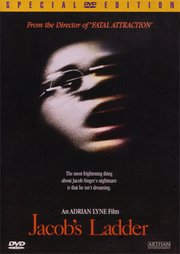
Jacob's Ladder


Jacob Singer (Tim Robbins) is an American soldier serving in Vietnam in the late 60’s. He and his comrades are relaxing in a clearing in the bush when they suddenly begin to feel terribly ill, some of them vomiting and undergoing frightening convulsions. There’s a report of movement in the bush, gunfire erupts, mortar shells explode all around, and the soldiers respond with frenzied violence culminating in Singer being bayoneted in the stomach by an unseen enemy and later taken aboard a helicopter for medical evacuation.

In the next scene, Singer awakens from a nap on a deserted New York City subway car hurtling along the tracks. He doesn’t know if he’s passed his stop. He walks into the next car and asks a woman where they are. She just stares at him creepily. As the subway comes to a stop, he looks down and sees a disheveled figure lying across some seats by the exit, and there appears to be a squirming, snakelike creature protruding from his body. Singer hastily exits the subway car to find himself locked underground with no one else around. There appears to be an unlocked exit on the other side of the tracks, but as he makes his way across the tracks, he has to dodge a train that comes racing out of nowhere, and as the train flies away from him, he sees grotesque faces staring out at him from the windows.

Singer goes home to his girlfriend Jezebel (
Elizabeth Pena) and tries to carry on his life as usual. He’s an underachieving postal worker with a PhD living in a grimy New York apartment. But he’s plagued by more and more demon-like figures and frightening experiences and learns that others who served with him in Vietnam and were with him on that fateful day in the bush are having similar experiences and dying one-by-one in mysterious ways. He goes to sleep and wakes up to find himself in bed with his former wife (Patricia Kalember) in their old apartment, and one of his young sons (Macaulay Culkin), who was fatally injured by a car years ago, walks into the room complaining that he can’t sleep. Jacob tucks him into bed, bids goodnight to his other two children, and the next thing he knows, he’s back with Jezebel. He becomes increasingly disoriented and frightened by his nightmarish experiences and desperately seeks answers to what’s happening to him. A former Army chemist seems to have part of the answer, but his chiropractor friend Louis (Danny Aiello) may have a much bigger part of it when he quotes the great Christian mystic Meister Eckhart: “The only thing that burns in hell is the part of you that won't let go of your life: your memories, your attachments. They burn them all away, but they're not punishing you, they're freeing your soul."

Jacob’s Ladder was released in 1990. Its director was Adrian Lyne, who adapted it from a screenplay by Bruce Joel Rubin. A number of prominent reviewers panned the film as a pretentious exercise in heavy-handed symbolism and incoherent obscurity, but I don’t understand how they could have been addressing the same film I saw. I found Jacob’s Ladder to be a remarkable meditation on life and death and an extraordinarily compelling piece of filmmaking. If I had a top ten list of my all-time favorite films, Jacob’s Ladder would definitely be on it. I give it an exceedingly rare A+

If you see this film on DVD, I strongly recommend that you get the “Special Edition” version with a “Special Features” documentary on the making and meaning of the film. It features illuminating commentary by director Adrian Lyne and screenwriter Bruce Joel Rubin.

Friday, January 06, 2006

My Sister's Keeper?

A former girlfriend and still very dear friend of mine is now in the burn unit of a New York hospital with first and second degree burns to her face and hands from smoking while wearing a nasal canula delivering a high flow of oxygen. Her boyfriend tells me she’s going to be okay, but I’m still concerned about her. Not only am I concerned about her right now, but I also wonder what the future holds for her. She has a deteriorating heart and lung condition (primary pulmonary hypertension) with a bleak prognosis. She also has a bad liver. She has no business smoking cigarettes, even if she weren’t on constant oxygen, but the oxygen makes it extremely dangerous, as she’s just learned first-hand.

I didn’t even know that she was smoking. I guess she decided that if there’s nothing she can do to save herself from certain early death, she might as well enjoy herself more in the time she has left. One problem with this is that it’s a selfish way to think that ignores the needs of her family and friends to have her around and in as good health as possible for as long as possible. The other problem is that she could incinerate herself and her family by smoking around all of the oxygen she has in her room. I doubt that she’ll pose that danger anymore after going through what she is now, but what if she does? Is there anything I can do to help make sure that doesn’t happen? And even if there is, what should I do?

As adults, we are supposed to choose our own actions instead of having them dictated to us by others. Generally speaking, I can’t make her do right, nor should I. But what if her actions endanger others? What responsibility do I and others have to try to compel her not to commit them? And what if her actions only endanger herself? How much should we try to force her to take care of herself? And how do we handle it emotionally and spiritually when we realize that there is essentially nothing we can do to stop someone from destroying herself and even endangering others?

I don’t know the answers to these questions. I don’t know if there are any. I guess we just have to learn to deal with these kinds of situations as best we can as we go along. But I don’t envy my friend’s boyfriend and daughter having to grapple with these problems every day. And God only knows how many others are in the same boat with relatives and friends who continue to indulge their self-destructive and sometimes dangerous desires and addictions.

Wednesday, January 04, 2006

Islamic Disgrace

My usual reaction to stories about religious intolerance and violence is one of predominate sadness. I am profoundly sad to see people fight with, harm, and kill others in the name of religion when their religion and understanding of God should be leading them to reach out to others with love, respect, and cooperation. But sometimes I encounter stories to which I react with far more anger than sadness. I have just read one such story about Taliban militants beheading a schoolteacher in Central Afghanistan while forcing his wife and eight children to watch. The teacher’s “crime” was that he taught at a high school that allowed girls as students. This was alleged to be against God’s law.

I feel extremely angry over this. Even more than anger, I feel disgust. I feel strong anger and disgust toward the particular individuals who carried out this reprehensible atrocity in the name of Allah. And I feel a more generalized anger and disgust toward a religion that does not unequivocally and strenuously condemn such barbarity. To his credit, one prominent Afghan cleric did say that there was no scriptural justification for the murder. But even he appeared to stop short of condemning the act or urging that its perpetrators be brought to justice. And I strongly suspect that we won’t be hearing other prominent or ordinary Muslims do these things either. Consequently, I become increasingly convinced that this is because Islam is essentially a religion rooted in hopelessly primitive thinking and violence and that it might be better if Islam were to disappear from the face of the Earth.

Maybe I shouldn’t be saying such harsh things about any religion, especially in the grip of anger. But when I read that a prominent Saudi Muslim cleric issued a fatwa not long ago authorizing the use of nuclear weapons against American cities, when I see Muslims throughout the world dancing joyously in the streets in celebration of 9/11, and when I see and read about countless other violent and murderous acts and celebrations of such acts committed in the name of Allah and Islam, and not only is there not widespread condemnation of these events from Muslim clerics and common people all around the world, but there is often even religious rationalization of them, how can a reasonable person not come to think that Islam, as a whole, is a terribly, perhaps hopelessly flawed religion that is close to being a disgrace to the word “religion”?

It seems to me that Muslims everywhere must either speak out loudly and clearly in unison against the wholesale violence and slaughter we’ve been seeing committed in its name, or they can reasonably expect more and more people such as myself to take an increasingly dim view of their religion and to oppose the spreading of its influence.

Tuesday, January 03, 2006

How Naked Dare I Be?

Last Saturday night, I posted an entry that questioned the purpose of life and presented a rather dim view of my own life. My wife read it and interpreted it to say that I was contemplating suicide. Needless to say, she was quite upset. I think I managed to largely reassure her that I entertained no suicidal thoughts. As the entry itself said, I am both too cowardly and feel too much responsibility to others to kill myself. Not only that, but I love my wife and others dear to me and don’t want to leave them until I must. Finally, I don’t want to go to my grave without at least trying much harder to live a life of wise discrimination and integrity. Discrimination is distinguishing between right and wrong or good and bad, and integrity is doing what I think is right and not doing what I think is wrong.

But this incident of my wife’s tearful reaction to my blog entry has me wondering just how nakedly I dare reflect on my thoughts, feelings, and experiences in a public forum such as this. I find it cathartic to be able to express myself openly about personal matters, and I sometimes find it even more helpful to share my personal thoughts and feelings with others. But what if my wife, other members of my family, friends, or other people important to me in some way read things in my blog that cause them distress or lead them to take action that could cause me distress? Suppose, for instance, that I write things in my blog that an employer or prospective employer reads, doesn’t like, and ends up firing or not hiring me over? This may be unlikely, but it’s conceivable to me that the wrong people could read things I write here, know that I’m the one who wrote them, and take some kind of harmful action against me as a result.

So, I guess I will have to continue weighing my desire for uninhibited personal expression and catharsis against my regard for others and for my own welfare and make sure that I don’t expose myself too much in anything I say. But does this mean that I should change the name of my blog? Am I being misleading or outright dishonest to call it “Naked Reflections”?

Sunday, January 01, 2006

The Artistry of Self-Transformation

As an irrigator guides water to the fields, as an archer aims an arrow, as a carpenter carves wood, the wise shape their lives.
– The Buddha

Eknath Easwaran agrees with the Buddha that we can shape our lives into a work of vital art with our consciousness being the wood and our soul or spirit being the woodworker who fashions the wood into “the responses and attitudes we desire: love, wisdom, security, patience, loyalty, enthusiasm, cheerfulness.” That is, we can remake our character and personality into whatever we want them to be.

I find pleasure and inspiration in the idea that I can rise above the limitations, bad habits, and bad deeds that have characterized too much of my past. Yet, I wonder precisely who or what is Easwaran’s metaphorical “woodworker” who can build a new “house or fine piece of furniture” out of the wood of consciousness. For isn’t the woodworker partly the very consciousness that is trying to reshape consciousness—i.e., itself? How does a consciousness fraught with negative attitudes, dispositions, and habits transform itself into one radiating positivity and motivating good deeds, especially if this consciousness appears to be generated by a profoundly defective and limited brain?

Of course, Easwaran and other sages tell us that consciousness is not merely an epiphenomenal byproduct of brain activity. They tell us that it, to some degree, generates its own contents and may even occur outside a functioning brain. I still don’t understand how this can be, and therefore, I find it difficult to believe. Yet, there are undeniably people who have undergone tremendous personal transformations, and I would like to find a way to become one of them and to begin this new year evidencing positive changes in my own attitudes and behaviors as I reshape my own life into a vital work of beautiful and even inspiring art.

Saturday, December 31, 2005

Why Not Bother?

I’ve just seen “March of the Penguins.” It’s about emperor penguins in Antarctica. They endure incredible adversity each year in one of the harshest climates on Earth to survive and continue their genes and species through their offspring. In watching the starving males huddle against 100 MPH winds in –80 degree temperatures to keep themselves and the eggs they incubate alive while their starving female mates trek scores of miles across the ice to replenish themselves with food, I couldn’t help but wonder, “Why bother?” What is the point in struggling year after year just to suffer such terrible hardship and to procreate other penguins to suffer just as pointlessly as they do?

And how are we human beings so markedly different from the penguins? Even if a small percentage of us are fortunate enough to reside in places and circumstances where we can enjoy a modicum of happiness and help others to do the same, what does it all ultimately amount to, and why bother?

I do it because I’m too much of a coward to kill myself directly and because I don’t want to leave my wife and cat without the husband and caretaker they love and depend on. But here on the eve of a new year, I confess that I often believe that my wife, my cat, and the whole world would ultimately be better off without me. I look back on my life and think that it’s been a terrible waste of space and resources at best, and I honestly don’t believe that I have anything of real value to offer anyone or anything. I am too defective to the core of my being to be better than a burden.

Some might read this and think that I’m suffering some kind of holiday depression that many people go through this time of year. But I know depression intimately from past experience, and I’m not depressed. I’m just seeing myself and my life as they are without the usual adornments of platitudinous false optimism.

And yet, I will keep on keeping on and trying to be a better husband, caretaker, son, nephew, cousin, brother-in-law, friend, writer, student, and person regardless of how much or how little difference it makes in the overall scheme of things. Why bother? Why not?

Friday, December 30, 2005

To Practice or Not to Practice?

Today, Eknath Easwaran tells us that if the spiritually gifted Saint Teresa of Avila “went through twenty years of doubt and struggle before becoming established in God,” we can hardly expect to do it in less time. Easwaran appears to be trying to motivate us to keep plugging away on our spiritual path with the understanding that it can’t deliver instant enlightenment but will amply reward us if we hang in there long enough.

However, I’m afraid that I find Easwaran’s attempt at encouragement to be something less than encouraging. For what of those of us who probably don’t have decades to devote to a spiritual path and who almost certainly lack Saint Teresa’s innate giftedness? What hope do WE have of “becoming established in God”? And if our chances are little to none, why should we even bother with any kind of spiritual path?

I raised this issue in a previous entry, and ebuddha addressed it in his blog by arguing that the goal is not so much the destination as the journey. That is, one can enjoy the pleasures and fruits, however modest, of the spiritual path in much the same way that one can enjoy the benefits of swimming, running, or working out with weights without needing or being able to become an Olympic champion swimmer, runner, or weightlifter.

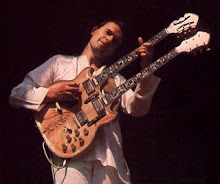
I think ebuddha makes a good point. Even though I don’t play guitar because I know that I’ll never come close to achieving the astonishing technical mastery of my favorite players John McLaughlin and Allan Holdsworth, I do still bowl and enjoy bowling even though I’ll never be another Earl Anthony or Walter Ray Williams, and I do still write and enjoy writing even though I’ll never be another Alan Watts or Eknath Easwaran. So, why shouldn’t I also adhere to a spiritual or integral path even if I could never become another Ramana Maharshi or Saint Teresa? Couldn’t my life still be enriched by a consistent practice the way ebuddha says his is?

I’m not sure bowling and writing are all that analogous to spiritual practice. I can bowl and feel instant rewards in the forms of exercise, enjoyment, competition, and even winning money that I’m much more hard pressed to experience meditating. When I write, I also have an immediate sense of accomplishment in the forms of crystallizing my thoughts and feelings and sharing them with others that exceeds anything I experience when meditating or repeating my mantram. I can’t help but wonder if, despite the admonitions of sages like Ken Wilber that we need to practice, practice, practice, I’d be better off using the untold hours I’d otherwise spend meditating to read, think, and write.

Yet if I like to read, think, and write about spirituality and enlightened living, how can I hope to do a credible job of it unless I actually practice the disciplines that ground my words in the genuine wisdom of actually knowing firsthand whereof I speak instead of merely spouting untested speculations or parroting other people’s words? But if I legitimately doubt that I have the talent and the time remaining to become enlightened, why should I bother with a spiritual path when I could be using that incalculably precious time to bowl, read, think, write, learn another language, work out with weights, or study the guitar? I feel as though I have little enough time to do all the things I want to do now, and when I finally start working full time, I will have almost no time for anything but working, eating, and sleeping. So why spend thirty minutes or more a day meditating and engaging in other so-called spiritual practices that seem to yield no tangibly positive results, when I could be doing something else that does? And if I don’t feel qualified to write about things I don’t know firsthand, then why not write about things I do?

I suspect that I’ll keep on writing about so-called spiritual and philosophical matters and that my spiritual or integral practice will intensify. But I also suspect that I will continue to hear the nagging voice of doubt that I’ve expressed here.

Tuesday, December 27, 2005

Go With the Flow?

Today, Eknath Easwaran writes of how having someone close to us die can set us on the path to finding the security of that which “death cannot reach.” But what is the nature of this security? In other writings, Easwaran addresses the unchanging spiritual core of our being that is boundless love, peace, and bliss. But how can love, peace, and bliss or the spiritual medium in which they occur be unchanging? What’s more, how can this spiritual medium or its experience exist independently of a living body and thereby survive the death of the body? Many saints and sages speak of the eternal spirit or pure consciousness that comprises our deepest and truest nature and which goes on living after our bodies die. But what is it, and does it truly exist? Or is it merely wishful thinking? Is the surest way to happiness to seek unity or an awareness of unity with unchanging spirit, or to understand deeply that there is nothing permanent and unchanging to cling to and to simply let go and flow with universal change? Or is it possible to do both at the same time or in complementary alternation?